Powder-coated aluminum decking is a niche product in residential markets.
 Advantages
- Aluminum is fully resistant to moisture, rot, and insects, making it ideal for harsh environments.
- Aluminum is non-combustible, making it ideal for locations that face fire hazards.
- The material never requires sealing or refinishing.
- It’s lightweight, which reduces structural load.
- Aluminum's high thermal conductivity means it cools rapidly after sun exposure, unlike composites, which retain heat.
 Limitations
- The industrial aesthetic doesn’t align with traditional residential projects.
- Initial costs exceed most alternatives.
- The material dents more readily than wood or composite options.
- The surface can become slippery when wet without proper texturing.
- Thermal conductivity helps with cooling but also means the surface can get hot initially under direct sunlight.
- Limited color options compared to other deck material options.
Ideal Applications
Aluminum is used in commercial and industrial settings, boat decking and pool surrounds, or where fire resistance or extreme moisture exposure demands non-organic materials.
Boat Deck Material Options: Specialized Marine Applications
Marine environments demand materials that withstand constant moisture exposure, salt spray, UV intensity, and the structural requirements of vessel applications.
Traditional teak
Traditional teak decking has dominated yacht construction for centuries, as its popular for its natural oils, non-slip properties when wet, and appearance. However, environmental concerns and cost have driven innovation in marine deck materials.
Synthetic materials
Synthetic teak alternatives manufactured from EVA foam or PVC deliver the look of traditional teak with better grip and much easier installation through peel-and-stick backing systems. These materials provide excellent cushioning, reduce heat absorption compared to fiberglass, and lower the maintenance requirements of natural teak.
Composites
Marine-grade composites specifically formulated for boat deck applications include higher-density formulations with improved UV stabilizers and moisture resistance, surpassing those of residential-grade products. These materials often feature integrated texture patterns designed to maximize wet-surface traction.
Aluminum and fiberglass
For commercial vessels and industrial marine applications, aluminum and fiberglass-reinforced panels with non-slip coatings remain the standard for their durability and safety.
The Bamboo Decking Alternative: Sustainable Performance Meets Value
Bamboo decking is a natural alternative that is only now becoming more widespread. As clients seek alternatives that balance performance, aesthetics, and environmental responsibility, bamboo decking is a reliable choice for homeowners who value sustainability.

Environmental Credentials That Matter
Bamboo is more sustainable than teak or natural hardwoods.
As a rapidly renewable grass rather than a slow-growth tree, bamboo reaches harvestable maturity in just 3-5 years compared to decades for hardwoods. The plant regenerates from its existing root system after harvesting. That way, it doesn’t need to be replanted, preventing soil erosion.
Bamboo cultivation requires little or no pesticides or fertilizers, and plantations absorb carbon dioxide and produce oxygen. For projects pursuing LEED certification or clients seeking a natural, sustainable decking option, bamboo's credentials certainly stand out.
Performance Characteristics
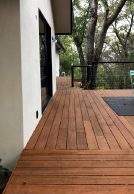
The engineering properties of strand-woven bamboo challenge assumptions about "alternative" materials being compromises. Compression strength and hardness ratings for strand-woven bamboo exceed those of many tropical hardwoods, including oak and maple.
This exceptional density translates directly into excellent resistance to scratches, dents, and wear patterns, even in high-traffic commercial applications. In addition, it has natural resistance to moisture absorption, reducing concerns about cupping and warping, and it exhibits minimal expansion and contraction compared to traditional lumber.
Bamboo can be easily used in environments with temperature and humidity fluctuations, where conventional wood requires extensive acclimation and still experiences seasonal movement.
Flexible looks
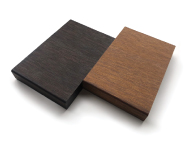
Modern bamboo decking manufacturing processes produce materials that can meet design expectations beyond a single "bamboo look."
Carbonization treatments create rich caramel and espresso tones ranging from light amber to deep chocolate brown.
Natural, unstained options deliver warm honey hues with distinctive grain patterns that highlight bamboo's character.
The consistent color and grain patterns across production runs create a uniform look, a key feature for large-scale commercial installations.
Value proposition
The price for bamboo decking puts it between mid-range composites and premium hardwoods. It’s usually 20-40% less expensive than tropical hardwoods, with comparable performance characteristics
All projects must be viewed in the long run; engineers, managers, and architects building a deck must consider maintenance costs. Properly installed bamboo decking requires only periodic cleaning without the annual sealing and staining demanded by pressure-treated lumber or cedar. While it’s a good idea to apply oil on bamboo decking occasionally, it costs less than conventional wood maintenance.
But how long does bamboo deck last? Quality strand-woven bamboo decking will last for 20-25 years with proper maintenance. That means bamboo decking competes on equal footing with composites and supplies a genuinely natural wood look.
Installation Considerations
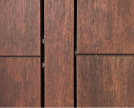 Bamboo decking installation is straightforward and relatively uncomplicated. The material can be installed with hidden fastener systems as well as traditional face screwing. Bamboo products are manufactured consistently, rendering installation far easier than with natural lumber.
Installers must account for thermal expansion in extreme-climate applications, but the expansion gap requirements are less stringent than for conventional wood due to bamboo's excellent stability.
Practical Applications and Project Types
Residential projects
Bamboo decking can be used for residential outdoor living spaces, thanks to its natural warmth, durability, and reasonable initial investment. The material can easily differentiate properties in competitive real estate markets and offers excellent performance for long-term homeownership.

Commercial hospitality settings
Restaurant patios, resort walkways, and hotel pool decks use bamboo's proven performance in high-traffic environments. Guests appreciate bamboo's environmental sustainability and its natural look.

Developments
Multi-family and mixed-use developments use bamboo decking to balance initial cost, maintenance requirements, and durability. The material withstands foot traffic while maintenance schedules remain manageable for property management teams.

Materials Matched to Project Success
Every decking project has its own set of constraints - budget, climate, foot traffic, maintenance expectations, and client preferences. Pressure-treated lumber is a good option when cost is the primary factor. Cedar and tropical hardwoods deliver organic beauty that synthetic materials can't fully replicate. Composites and advanced synthetics are the go-to for spaces that demand minimal upkeep. Aluminum handles the specialized demands of marine and rooftop applications.
But for professionals looking for a material that checks more boxes than most, bamboo decking is worth a closer look. It's genuinely sustainable, performs on par with premium hardwoods, looks natural in a way composites don't, and sits at a price point that makes it accessible across a wider range of projects.
If you're specifying your next deck and want to explore what dassoXTR's bamboo decking can offer, get in touch for your free quote or browse our wide range!
Key Takeaways
- The choice of material must balance the project’s specific factors, such as budget, maintenance requirements, climate conditions, aesthetics, and performance expectations. There is no single material that ticks all boxes.
- Lifecycle costs often matter more than initial price. While pressure-treated lumber is the most budget-friendly choice, maintenance requirements, replacement timelines, and labor costs impact total ownership expenses. Materials such as composites, bamboo, and tropical hardwoods may deliver greater long-term value despite higher initial costs.
- Environmental considerations increasingly influence specifications. Sustainability credentials, ranging from FSC certification for tropical hardwoods to rapidly renewable bamboo options, now factor prominently in project development.
- Specialized applications demand purpose-specific materials. Marine environments and high-traffic commercial areas have specific performance requirements that standard residential materials may not meet.
- Innovative alternatives like bamboo expand the performance-value spectrum. Modern engineered materials, including strand-woven bamboo, are options that didn't exist a generation ago, and combine sustainability, durability, and cost-effectiveness that challenge traditional wood materials.


FAQs
What is the most cost-effective decking material for residential projects?
Pressure-treated lumber is the most affordable material, ranging from $2 to $ 4 per square foot. However, if you factor in maintenance requirements over 15-20 years, mid-range composites or bamboo may deliver better total value.
Which decking material requires the least maintenance?
PVC and capped composite decks require minimal maintenance, mainly periodic cleaning with soap and water. These materials never need sealing, staining, or refinishing, making them ideal for projects and clients who prioritize convenience over initial investment.
Is bamboo decking actually durable enough for commercial applications?
Yes. Strand-woven bamboo decking often exceeds many tropical hardwoods and most domestic species in terms of stability, durability, and density. It’s scratch- and dent-resistant, making it suitable for high-traffic commercial environments, with expected lifespans of 20-25 years.
What is the best decking material in coastal or marine environments?
For boat deck material options, synthetic teak alternatives (EVA foam or PVC), marine-grade composites, or traditional teak perform best. For coastal residential or commercial decks, opt for materials with exceptional moisture resistance, such as composites, PVC, aluminum, tropical hardwoods, or bamboo. They outperform pressure-treated lumber, which deteriorates more rapidly in salt air.
How does climate affect decking material selection?
Extreme temperature fluctuations, high UV exposure, heavy precipitation, and freeze-thaw cycles all impact material performance. PVC and composite decks do well in wet climates but retain heat in intense sun. Tropical hardwoods and bamboo offer excellent stability across a wide range of temperatures. Cedar and redwood perform well in moderate climates but require more maintenance in harsh conditions.
Are there fire-resistant decking options for wildfire-prone areas?
Aluminum decking is the most fire-resistant material as it’s non-combustible. But among combustible options, tropical hardwoods and strand-woven bamboo offer better fire resistance than softwoods because of their higher density. Some composite manufacturers offer products with Class A or Class B fire ratings. Always verify local building codes for specific requirements in wildfire interface zones.