Bamboo Decking Pros and Cons - Everything You Need to Know
By
Avery Chua
Posted on
Monday, April 6, 2026 12:37 PM
The Real Pros and Cons of Bamboo Decking: A Guide for 2026
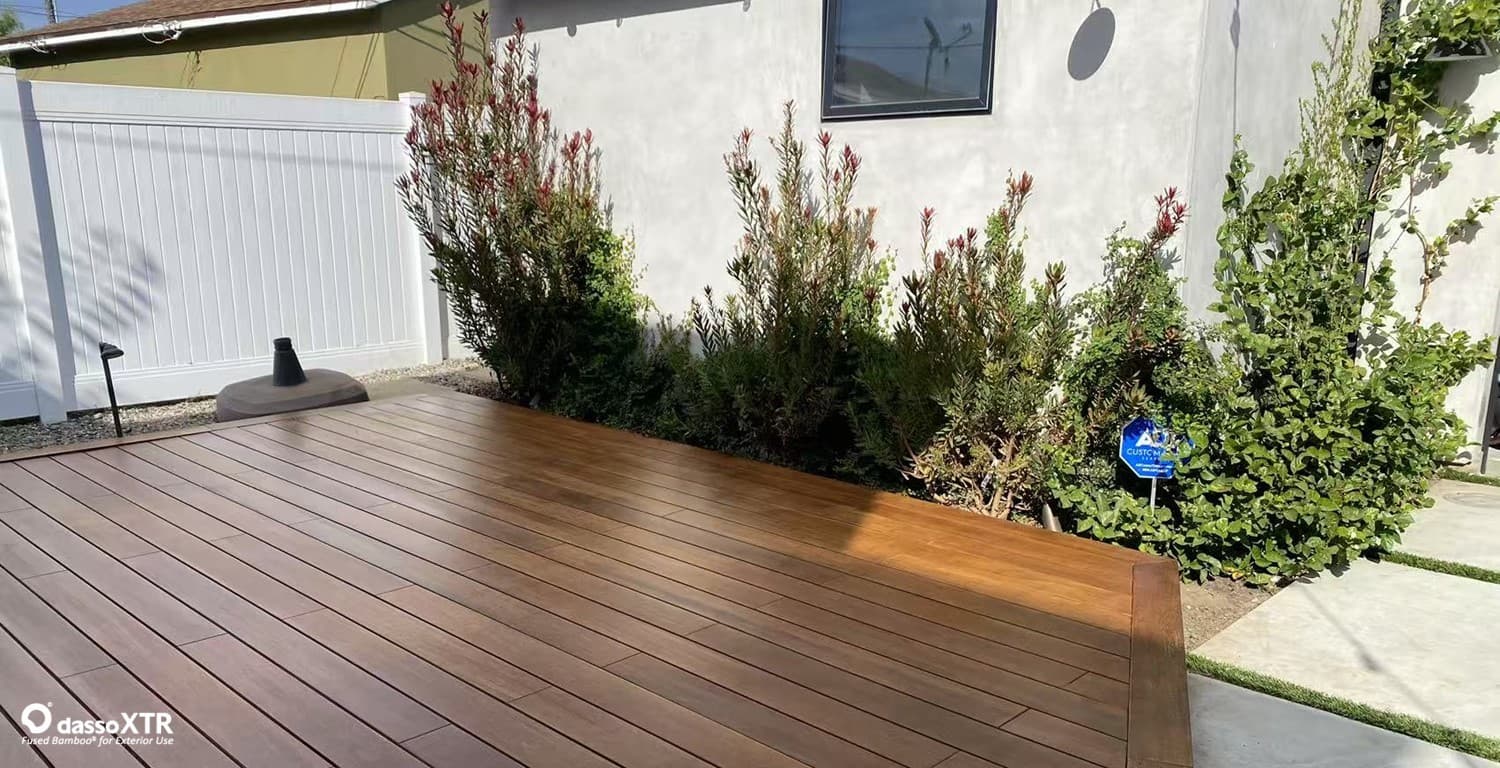
 Choosing the right decking material is a critical decision for architects, contractors, and homeowners alike. While traditional hardwoods and composite decking have long dominated the market, bamboo has emerged as a high-performance, naturally beautiful, sustainable alternative. Because bamboo is a renewable resource that can be harvested every five to seven years, it makes an excellent choice for those seeking eco-friendly renewable building products that stand out from the common traditional options.
Before you build, it is essential to look at the bamboo decking category to understand the engineering behind these boards. This guide breaks down the advantages and disadvantages, including the specific pros and cons of bamboo decking boards so you can make the right choice to create a beautiful outdoor space.
At a Glance: The Bamboo Comparison
|
Feature
|
Fused Bamboo Decking
|
Ipe (Brazilian Walnut)
|
Composite (Plastic/Capped)
|
|
Material Cost
|
Mid-Range / Affordable
|
Premium / Expensive
|
Low to Mid-Range
|
|
Hardness (Janka)
|
3,600+(Extreme)
|
3,600+ (Extreme)
|
~1,200 - 1,800 (Soft)
|
|
Stability
|
Superior (Minimal movement)
|
Variable (Can cup/twist)
|
High expansion/contraction
|
|
Sustainability
|
Renewable (5–7 years)
|
Slow growth (50–100 years)
|
Non-renewable / Plastic
|
|
Fire Rating
|
Class A
|
Class A
|
Varies (often Class B/C)
|
The Pros of Bamboo Decking

1. Superior Durability and Hardness
Fused bamboo undergoes a thermal treatment and high-compression process that removes natural sugars (making it "undigestible" to termites and rot). This results in a board denser and harder than Ipe. For contractors, this means a "callback-free" surface resistant to dents, scratches, and heavy foot traffic.
2. Rapidly Renewable Sustainability
Unlike hardwoods that take a century to mature, bamboo is a grass harvested every 5–7 years. It grows over 30 inches in a single day. For architects aiming for LEED certification, bamboo offers an eco-friendly profile that traditional timber simply cannot match.
3. Class A Fire Rating & Safety
Safety is paramount in commercial and high-density residential buildings. Premium bamboo products are fully tested to comply with WUI requirements and carry a Class A Fire Rating (ASTM E-84), offering fire resistance comparable to concrete or steel.
4. Dimensional Stability & Precision
Because of the "fusing" process, these boards experience minimal expansion and contraction. Unlike natural wood, there are no knots or "bad boards" in the pack.
Pro Tip: Many systems use End-Matched Modules, a precision interlocking system that allows you to join boards together seamlessly, reducing waste and installation time.
The Cons of Bamboo Decking
1. Required Maintenance (The "Silver Patina")
Bamboo is a natural fiber, not a "set-and-forget" plastic. To maintain its original "Espresso" or "Cognac" tones, it requires periodic cleaning and UV-protective oiling. Without an annual or bi-annual coat, the boards will eventually weather to a beautiful, soft silver-grey patina.
2. High Density Requires Specialized Tools
You cannot treat bamboo like soft pressure-treated lumber.
Pre-drilling is mandatory for all fasteners.
Carbide-tipped saw blades are required. Because bamboo is so dense, it will dull standard steel blades significantly faster than traditional wood.
3. Modular Length Limitations
Homeowners accustomed to 16ft or 20ft boards may find bamboo’s modular nature a transition. Most high-end bamboo comes in 6ft and 10ft lengths. While this makes shipping and handling easier, it requires a design that embraces the modular aesthetic.
Maintenance Schedule: Keeping the Luster
Because bamboo reacts to UV rays similarly to tropical hardwoods, professionals recommend the following timeline:
- Post-Installation: If using unfinished boards, apply high-quality saturating oil (e.g., Woca or Messmer’s) immediately.
- Bi-Annual Cleaning: Use a specialized bamboo cleaner to remove pollen and dirt to prevent the surface from becoming slippery.
- Re-Oiling: A fresh coat every 2 years on horizontal surfaces (decks) and 5 years on vertical surfaces (cladding) will maintain the rich, deep color.
Final Verdict: Is Bamboo Right for You?
For the architect seeking LEED points, the contractor wanting a stable material with zero defects, and the homeowner wants the luxury of hardwood without the environmental guilt, Fused Bamboo is an elite choice.
As long as you are prepared for the occasional re-oiling, bamboo provides a level of structural integrity and natural beauty that plastic composites simply cannot replicate. It stays cooler underfoot in the summer sun and remains rock-solid for decades.
Avery Chua
Avery Chua has over 30 years of manufacturing and product development in the wood and bamboo-based industry. He has worked across industry mostly in the pioneering stage of production involving MDF, plywood, adhesives and modern coatings. He wears many hats throughout his journey ranging from technologist, quality control, production, R&D, product development and market expansion. His knowledge comes handy in integrating usage of wood, bamboo, adhesives and coatings.