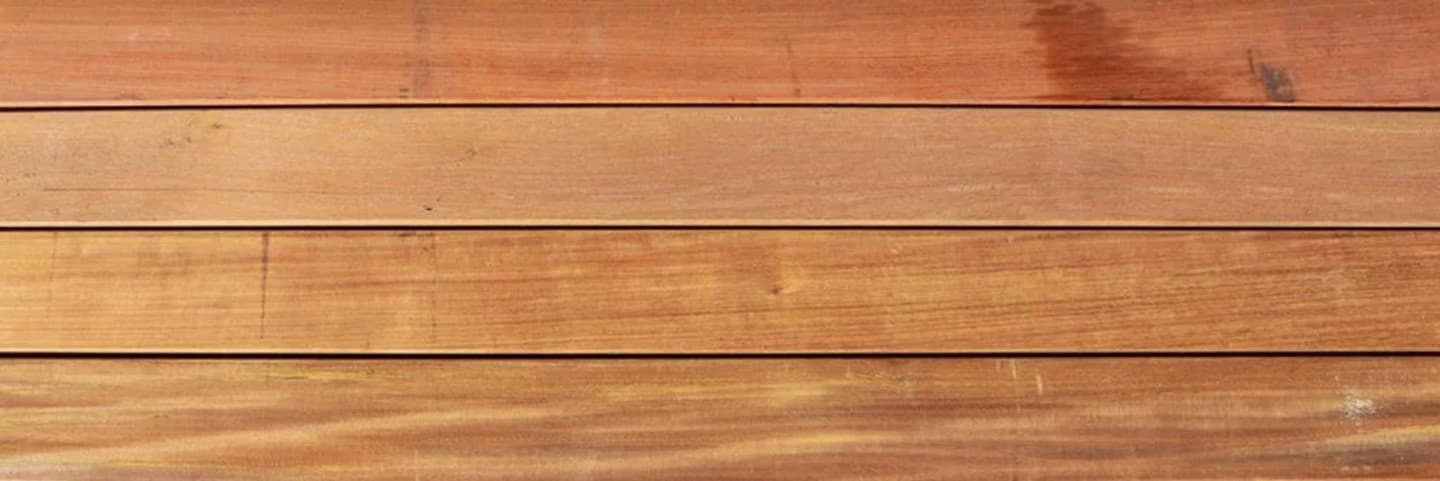
What You'll Learn
- Why construction professionals are reconsidering Ipe despite its reputation
- The most viable Ipe alternatives across hardwood, engineered, and composite categories, including bamboo decking
- How to match the right decking material to your project's budget, site conditions, and client expectations
- How bamboo decking compares to Ipe on durability, aesthetics, and total cost of ownership.
Ipe has long been the benchmark for high-end outdoor decking. It is dense, looks good, and is extraordinarily durable: a wood deck built from Ipe can last decades under the right conditions. But that reputation comes with a price tag and maintenance requirements that give many construction professionals pause. As building professionals increasingly weigh cost, sustainability, and long-term performance, the conversation around Ipe alternatives has never been more active.
Thankfully, there are alternatives to Ipe with comparable durability that are more affordable for large-scale construction projects. Let’s take a look at the most viable options on the market today to help you choose the right decking material for your next project.
Why Professionals Are Looking Beyond Ipe
High upfront cost
An Ipe deck is an investment. The higher upfront cost is only one part of the equation, but one that should be considered for large-scale construction projects.
Working with Ipe
Ipe is notoriously difficult to work with: it blunts cutting tools quickly, requires pre-drilling, and demands consistent oiling to keep its appearance. Left untreated, Ipe will turn a dull silver and crack over time.
Supply chain variability
Ipe is subject to supply chain variability and sustainability concerns tied to tropical hardwood harvesting. Recently, Ipe has been listed in CITES Appendix II as an endangered species. It can be difficult to obtain substantial quantities of Ipe within set timetables.
Climate concerns
In climates with extreme weather, such as freeze-thaw cycles, heavy rainfall, or prolonged sun exposure, Ipe's performance can vary more than its reputation suggests. A wood deck will always be susceptible to moisture infiltration, insect damage, and mold and rot over time, regardless of species.
The above factors are pushing more construction professionals to explore decking materials that deliver comparable beauty without the same demands and at more affordable prices.
Ipe Alternatives Worth Considering
Cumaru
Before moving to composite and engineered options, let’s discuss cumaru, also known as Brazilian Teak, as a direct hardwood decking alternative to Ipe. Like Ipe, cumaru is a dense tropical hardwood with a fine grain and strong natural durability.
Ipe and cumaru share similar performance profiles: both are resistant to moisture, insects, and heavy foot traffic though Cumaru is somewhat less durable than Ipe. Cumaru, however is generally more accessible and can cost less than Ipe while maintaining similar aesthetics. For projects where hardwood decking is a firm specification requirement, and the client is set on real wood, it is one of the closest substitutes.
That said, it carries many of the same working challenges as Ipe wood, and the same sustainability concerns around tropical hardwood sourcing apply.
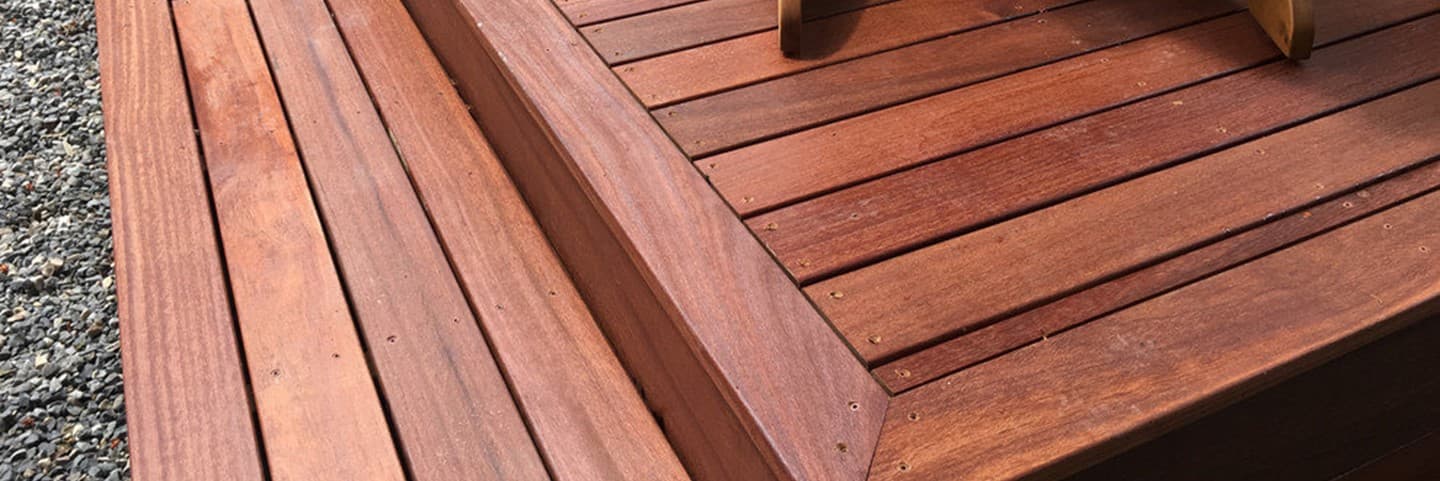
Thermally Modified Wood
Thermally modified decking is a good alternative for professionals who want the look and feel of real wood without the long-term instability that comes with it. It is produced by heating timber to high temperatures in a controlled, oxygen-free environment. The process permanently alters the cellular structure of the wood, making it far more resistant to moisture, decay, and dimensional movement than untreated timber. These properties put it in a similar performance bracket to Ipe when installed correctly.
What makes thermally modified wood genuinely useful as an alternative to Ipe is its combination of visible grain, structural stability, and predictable long-term behavior. Unlike conventional wood decking, modified wood does not swell, shrink, or cup under variable weather conditions. It is moisture-resistant, maintains its appearance well, and does not require the intensive oiling schedule that Ipe requires. Some thermally modified decking with added fire-resistant chemical products also carry a Class A fire rating, which can be a relevant specification requirement for commercial and multi-family residential projects.
Modified wood can be used for both decking and siding, making it a flexible option that few other materials in this category offer. For projects with a unified deck design that extends to exterior cladding, thermally modified wood is a consistent material solution across both applications. It is similar to Ipe in appearance and durability, easier to source consistently, and more predictable across different climates. However, the durability and density of thermal wood is very much depending on the original species of wood use for thermal treatment process. Most thermal wood uses pine wood which is a softwood so lack the strength of hardwood like Ipe.
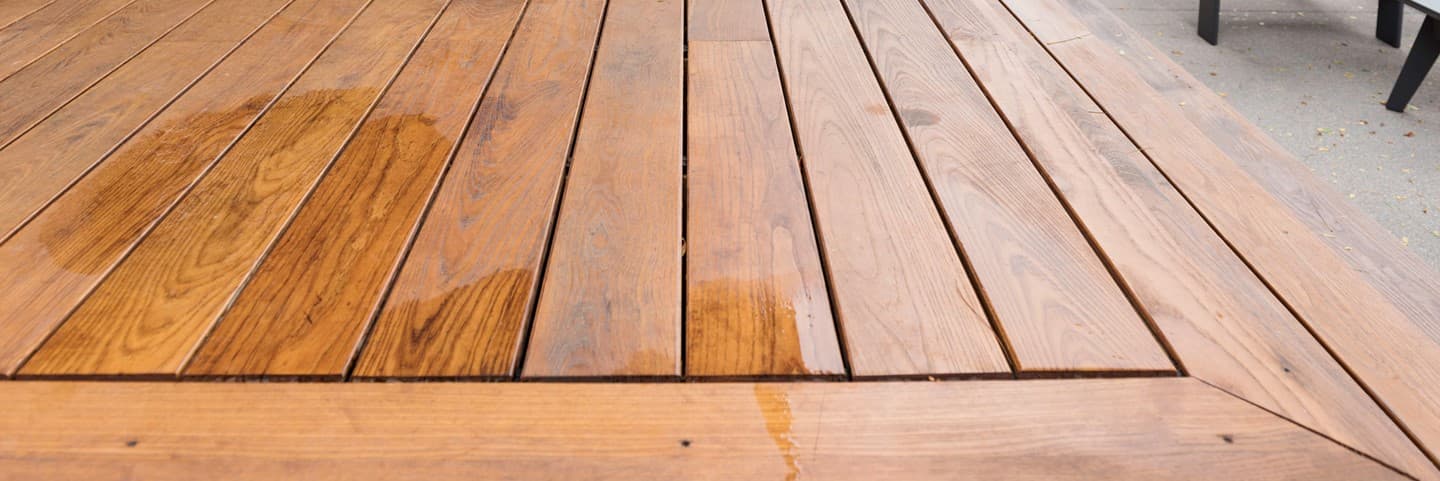
Pressure Treated Lumber
Pressure-treated wood remains one of the most widely used decking materials in residential and commercial construction. Treated lumber is cost-effective, widely available, and straightforward to work with. Designed to resist rot and insect damage, it is a dependable baseline option.
That said, pressure-treated lumber does require specific maintenance. Without regular staining and sealing, it will gray, warp, and check. Decking that requires consistent upkeep may not fit every client's expectations, particularly in projects where minimal maintenance is a stated priority. Compared to wood species like Ipe, it also lacks the visual richness that makes natural wood decking so desirable. Not to forget, all pressure treated lumber are made from softwood as well which lack the strength and durability.
For budget-driven projects where aesthetics are secondary, pressure-treated lumber is a practical choice. For higher-end applications, it can feel short of what's required.
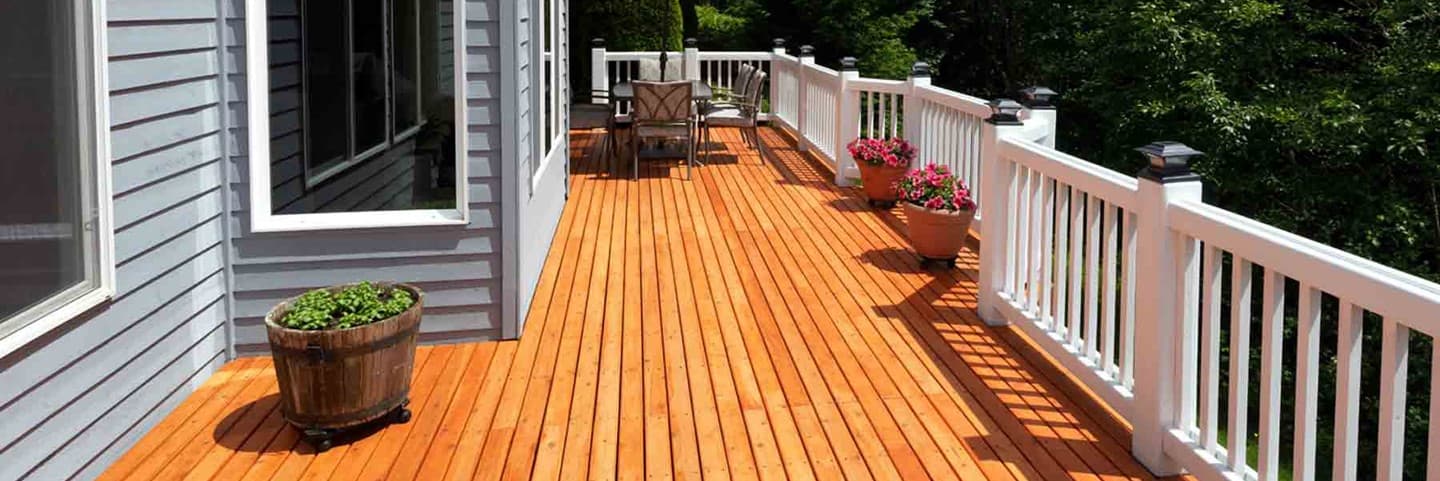
Composite Decking
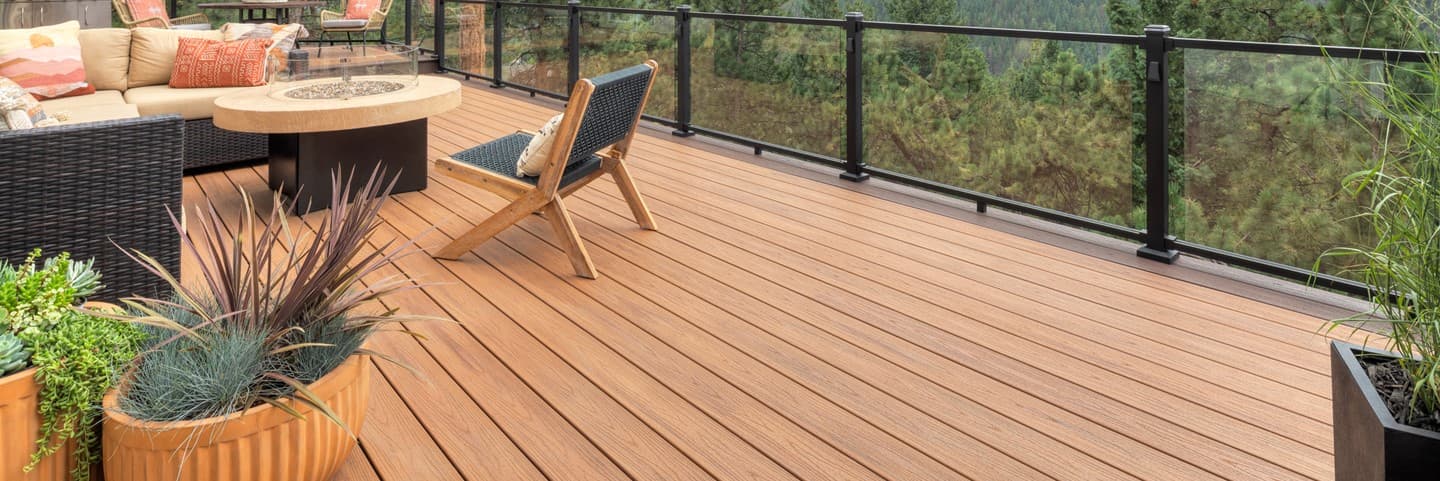
Composite decking has become a very popular decking material in the industry, and with good reason. Made from a blend of plastic and wood dust as filler, often incorporating recycled materials, composite boards are designed to resist the conditions that compromise traditional wood decking over time.
Composite decking is made to resist fading, staining, and moisture infiltration. It does not require staining, sealing, or the periodic maintenance a wood deck demands. For clients seeking low-maintenance decking, it is a great choice.
Modern composite decking also performs well under extreme weather conditions. Unlike natural wood decking, which can be susceptible to mold and rot when exposed to prolonged moisture, composite boards are far more resistant to weather-related degradation. They hold up better under sun exposure, with many products designed to minimize color shift over time. It’s worth noting that composite decking can get hotter than wood in direct sun, which is worth discussing with clients if the decking material is being installed in sun-exposed areas.
Composite decking comes in a range of colors and profiles that mimic the appearance of natural wood decking without the variability of real wood. For projects that require consistency throughout the outdoor design, composite and PVC decking give you a reliable, uniform replication of the look of natural wood albeit it replication is somewhat noticeable.
One consideration: composite decking tends to cost more upfront than pressure-treated lumber. If your clients are comparing decking material costs, frame the higher upfront cost against the reduced maintenance requirements over the life of the deck. Ultimately, the total cost of ownership often favors composite.
PVC Decking
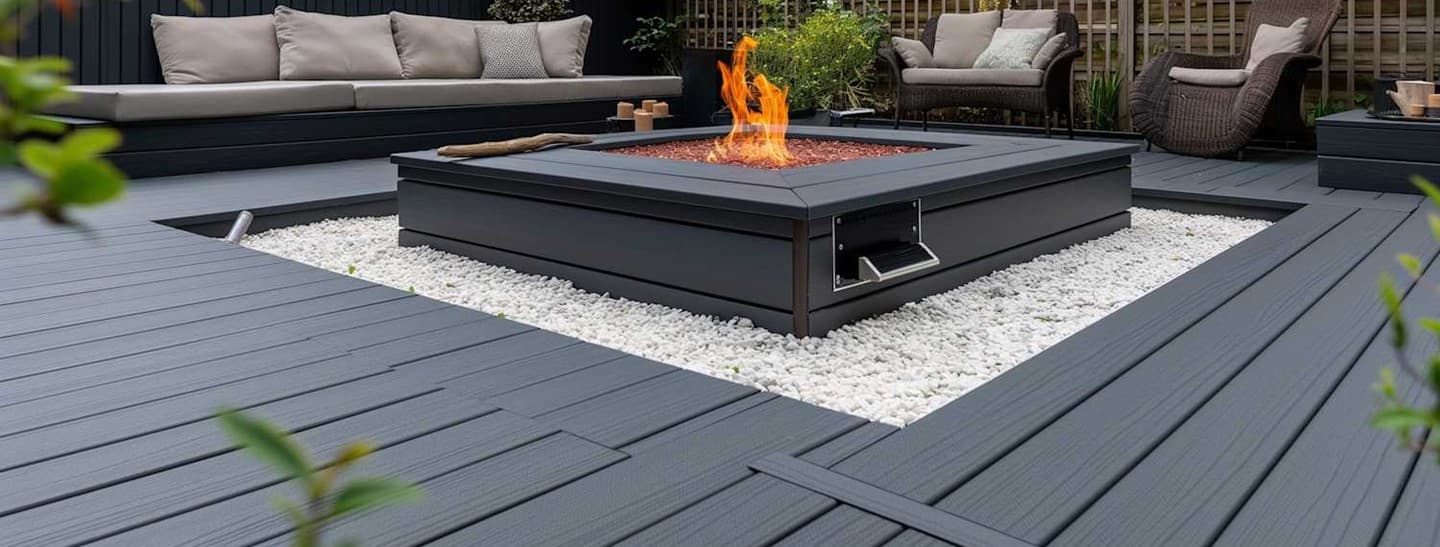
PVC decking takes the low-maintenance profile of composite one step further. Where composite boards combine plastic and wood dust, PVC decking is made entirely from cellular PVC, which means it contains no organic material that can support mold and rot or attract insects.
For projects in coastal environments, shaded conditions, or areas with consistently high humidity, PVC decking is a serious contender. It requires minimal maintenance over its lifespan, is highly resistant to moisture infiltration, and performs well in extreme weather conditions. Like composite, it comes in a variety of colors and profiles designed to mimic the appearance of traditional wood decking.
PVC and composite each have their strengths, so the choice often comes down to the specific weather conditions and site context. PVC is generally the better choice when moisture is the primary concern; both composite and PVC products can meet aesthetic requirements and expectations.
The trade-off with PVC decking is primarily cost, as the latter is often more expensive than wood and composite decking. For projects where the long-term performance and low maintenance requirements justify the investment, PVC decking is a smart option, but it will require a conversation with clients about the upfront price.
Bamboo Decking
Bamboo decking is perhaps the most overlooked option in the current market for construction professionals. While it is increasingly recognized in residential design circles, it has yet to be widely used in the professional sector, despite reliable credentials and sustained performance.
Technically, bamboo is a grass rather than a timber species. Engineered bamboo decking, especially fused bamboo - the thermal treated strand-woven bamboo, is processed under high heat and pressure to produce a material with hardness ratings that rival or exceed traditional hardwoods. That makes it a genuinely credible alternative to traditional wood decking, including Ipe.
Let’s see why professionals can use bamboo decking as a reliable and cost-effective decking option.
Durability
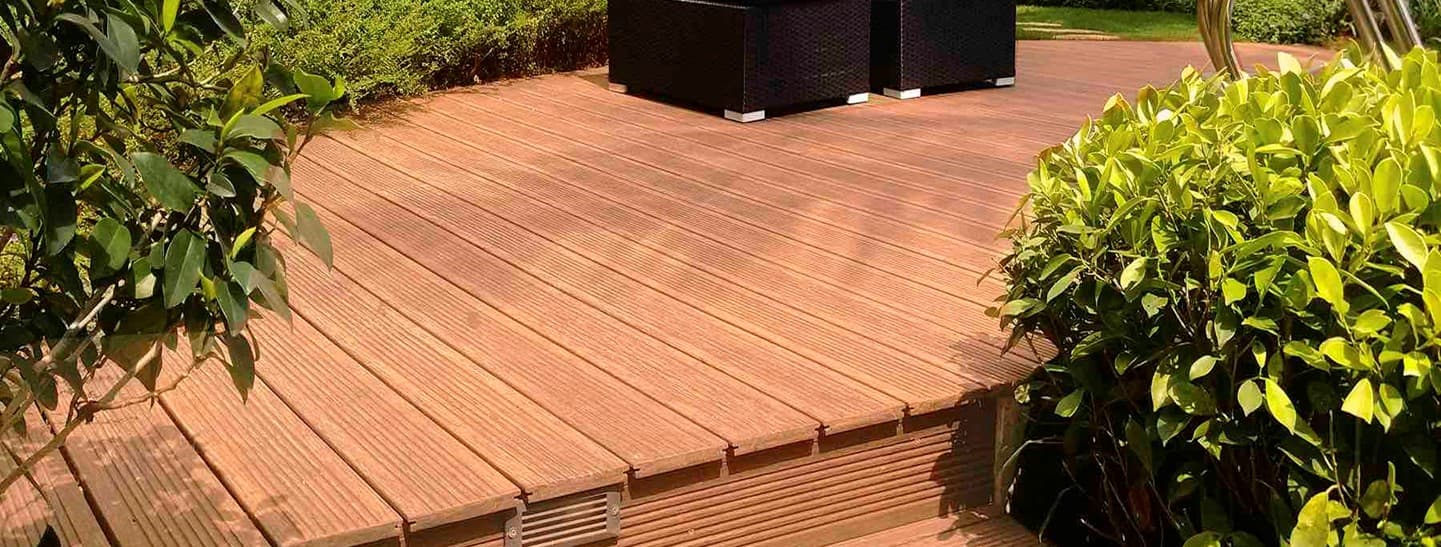
Fused bamboo decking is exceptionally hard and resistant to denting and surface wear. In real-world conditions, it performs comparably to exotic hardwoods like Ipe wood when properly installed and finished.
Resistance to the elements
Quality bamboo decking products are designed to resist moisture, mold, rot, and insect damage, which are natural challenges that wood decks can be susceptible to over time. In extreme weather conditions, engineered bamboo holds its structural integrity better than many expect. All these properties are fully tested and verified by ICC-ES.
Natural beauty
Bamboo decking offers the look of natural wood with warm tones, visible grain, and the aesthetic character that makes real wood decking so beautiful, without requiring the same level of maintenance. Bamboo decking is ideal for clients who want the look of wood without its long-term requirements.
Sustainability
Bamboo is one of the fastest-growing plants on earth, as it matures in years rather than decades. For projects where sustainable material sourcing is a specification requirement or client priority, bamboo decking offers an alternative to traditional wood decking that is substantially more renewable than tropical hardwoods.
Cost
The cost of bamboo decking is on the higher end and is more expensive than pressure-treated lumber. However, it is generally competitive with premium composite decking and more accessible compared to exotic hardwoods. If you input the maintenance requirements of a natural wood deck, the total value proposition is strongly in favor of bamboo decking.
Further cost saving with Fused Bamboo decking is saving on installations. The material is modularly designed to end-match to each other hence require less cutting. Less cutting results in less wastage and reduce installation burden.
For construction professionals building a deck where natural beauty and durability are the primary drivers, bamboo decking is a reliable, durable option that will satisfy clients seeking the look and feel of wood. It is one of the few decking materials that can genuinely replicate the visual appeal of traditional wood decking with a more manageable maintenance profile.
Budget-constrained projects with standard weather conditions
Pressure-treated wood remains the most cost-effective starting point, provided clients understand the maintenance requirements.
Low maintenance is a priority
Composite decking offers the best combination of low maintenance requirements, durability, and accessibility at a market-competitive price. PVC decking is the step up if moisture resistance is required.
Natural aesthetics are non-negotiable
Bamboo decking, thermally modified wood, and high-quality composite boards designed to mimic the appearance of natural wood are the strongest alternatives. For clients who want real wood, cumaru and fused bamboo is the closest species to Ipe in terms of grain, density, and durability.
Maximum longevity in extreme weather conditions
PVC or composite materials, with PVC decking taking the edge in high-humidity or coastal environments. Thermally modified wood is also worth considering here, as its modified cellular structure makes it far more moisture-resistant and less prone to dimensional movement than conventional wood decking.
No single material is the right decking material for every project. The goal is to make the best choice based on current and long-term requirements, including the long-term performance, appearance, and maintenance needs of each decking material.
Which Is the Best Ipe Alternative?
The best decking material for a specific project involves weighing a range of options across performance, cost, aesthetics, and sustainability.
Construction projects vary and include high-traffic commercial spaces or clients who want their dream deck. The main goal is to find the right decking material that meets expectations and aligns with the project's architectural design. And, of course, construction professionals must balance installation costs with long-term maintenance requirements.
Alternatives to wood have matured significantly. Composite, PVC, and bamboo are all materials similar to traditional wood in appearance but designed for modern performance requirements. They are reliable contenders to what were once considered Ipe-only specifications.
Today's best decking materials are designed to reduce the need for ongoing maintenance and costly upkeep. Products made from recycled materials, like many composite boards, can be made to satisfy sustainability requirements that beautiful natural hardwoods like Ipe simply cannot meet.
The choices of decking materials have never been better. Assess your project and determine which decking material makes sense for the project and your clients. And don’t forget new materials like fused bamboo, which can deliver what your clients expect with minimal maintenance requirements.
Key Takeaways
- Ipe's high cost, difficult workability, and supply chain variability make it a harder sell on large-scale projects.
- Bamboo decking is the most underused alternative. It has hardness comparable to tropical hardwoods, natural aesthetics, and a more sustainable sourcing profile.
- Cumaru is the closest direct hardwood substitute, with similar density, grain, and durability, at a more accessible price.
- Thermally modified wood delivers real-wood aesthetics with significantly better dimensional stability and lower maintenance than Ipe.
- Composite and PVC are the lowest-maintenance options; PVC takes the edge in coastal and high-humidity environments.
- Total cost of ownership, not upfront price, should drive the material selection conversation with clients.
FAQs
What is the most low-maintenance alternative to Ipe decking?
Bamboo decking is an often-overlooked alternative. It resists moisture, mold, rot, and insect damage, and requires low maintenance. PVC decking and composite decking are good alternatives as well, requiring essentially no staining or sealing and holding up particularly well in high-humidity environments.
Is bamboo decking a durable option for professional construction projects?
Yes. Strand-woven bamboo decking is made under high heat and pressure to deliver a hardness comparable to that of tropical hardwoods. It performs well in outdoor conditions and resists mold and rot effectively when properly installed. Construction professionals often overlook bamboo decking because they don’t know it well.
How does composite decking hold up compared to wood decking over time?
Composite decking is designed to resist the conditions that degrade wood decks, such as moisture, sun exposure, mold and rot, and insect damage. While a high-quality wood deck can match composite decking in aesthetics, wood decks require consistent maintenance to maintain their appearance and structural integrity. Composite decking reduces that burden significantly over the life of the deck.
Is pressure-treated lumber still a viable decking material for outdoor projects?
Pressure-treated lumber is widely used and is a practical option for budget-driven projects. However, it does require regular staining and sealing to keep its appearance and performance, and it does not deliver the natural beauty of hardwoods or the low-maintenance profile of composite and PVC decking.
What should I consider when building a deck in extreme weather conditions?
Climates with significant moisture, large temperature swings, or prolonged sun exposure require decking materials designed to withstand those conditions. Bamboo decking is perfect for this, as it performs reliably in variable outdoor conditions when properly treated. PVC decking is another strong performer in high-moisture environments, while composite decking handles sun exposure and general weather conditions well. Natural wood decks will require more active management in demanding climates.