Parts of a Deck
By
Avery Chua
Posted on
Wednesday, June 10, 2026 6:53 PM
Building a deck is a rewarding outdoor project that transforms your backyard into a functional outdoor living space. However, it is also a complex engineering task. Building a deck is like putting together a puzzle where every piece handles a specific job—from holding the weight to keeping you from falling off. Whether you are looking at a composite deck or traditional wood, understanding the deck's anatomy is crucial for a safe and secure result.
In this guide, we break down the deck construction parts into five main categories: the foundation, the structure frame, the surface, the railing system, and the stairs.
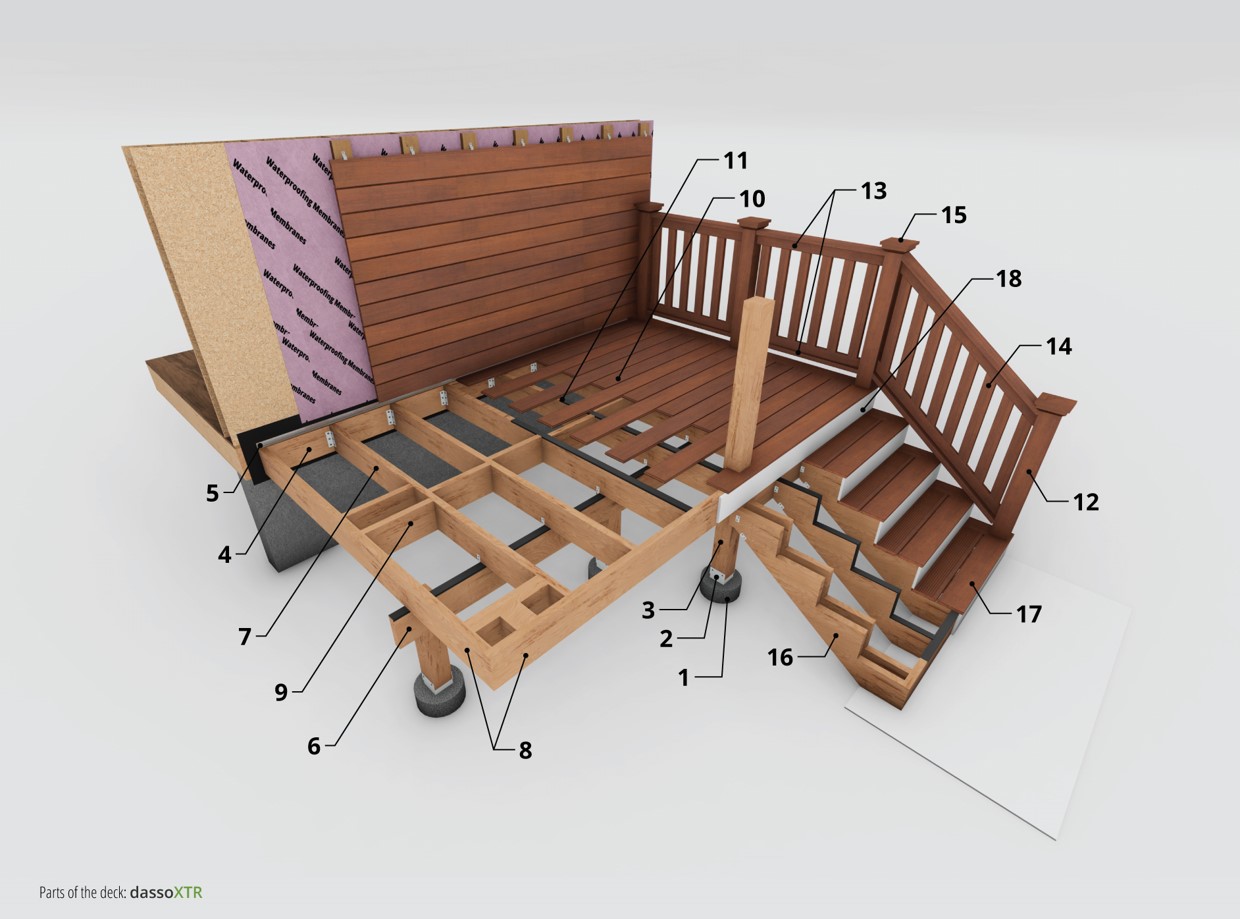
A. The Foundation: Providing a Solid Base
The foundation is the most critical part of any deck build. It must provide a solid base to support the deck and prevent it from sinking into the ground. The foundation includes the footing, the post anchor and the post.
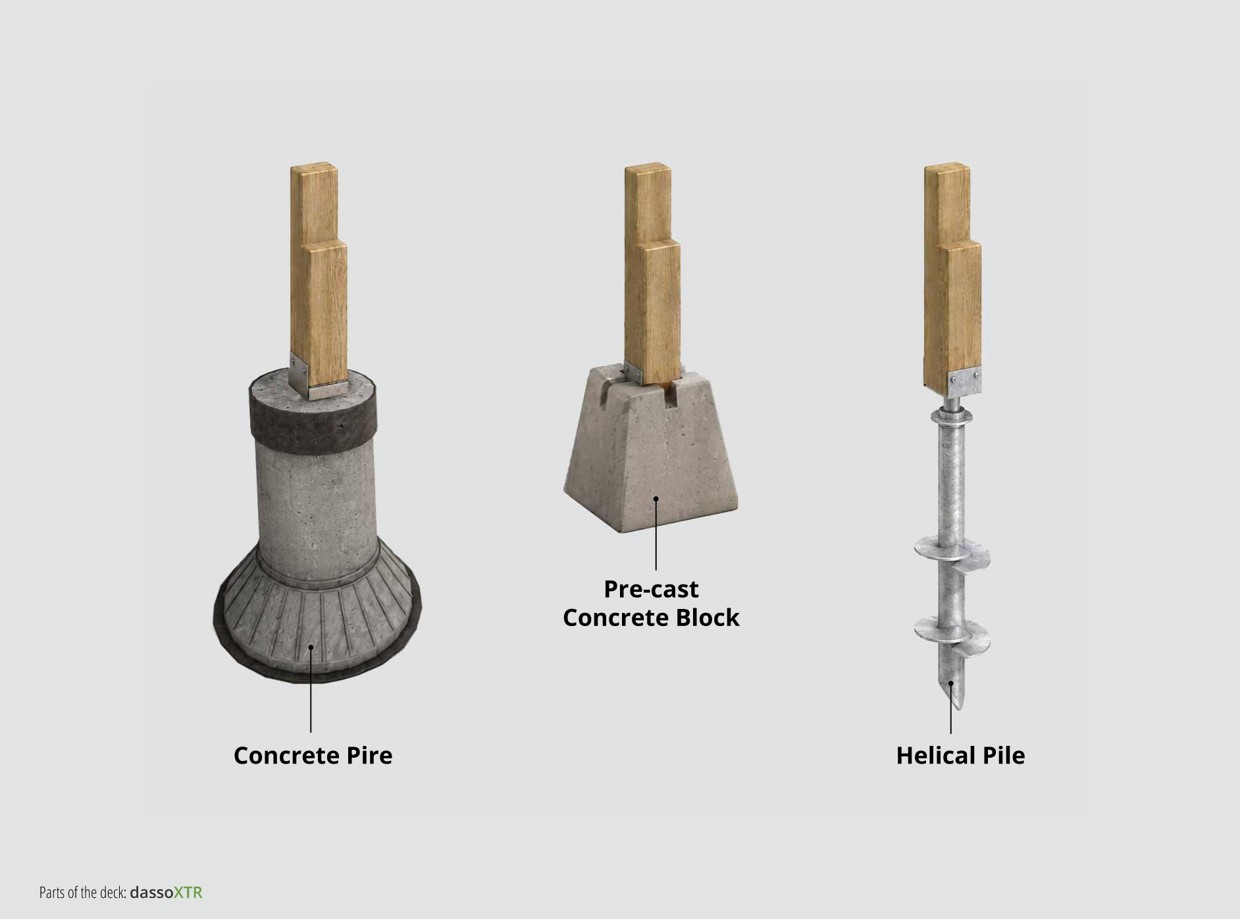
1. Footings: These are concrete bases poured below the frost line. Proper deck footings ensure the structure doesn't shift during freeze-thaw cycles. The type of footing you use depends on your local building codes and soil conditions.
2. Post Anchors/Bases: This metal hardware connects the wooden support posts to the concrete. Using post anchors is important because it keeps the wood post from touching the ground, which helps prevent water absorption and rot.
3. Posts: Often referred to as deck posts, these are the vertical "legs" (usually 4x4 or 6x6 lumber) that hold the deck up and transfer the weight to the footings.
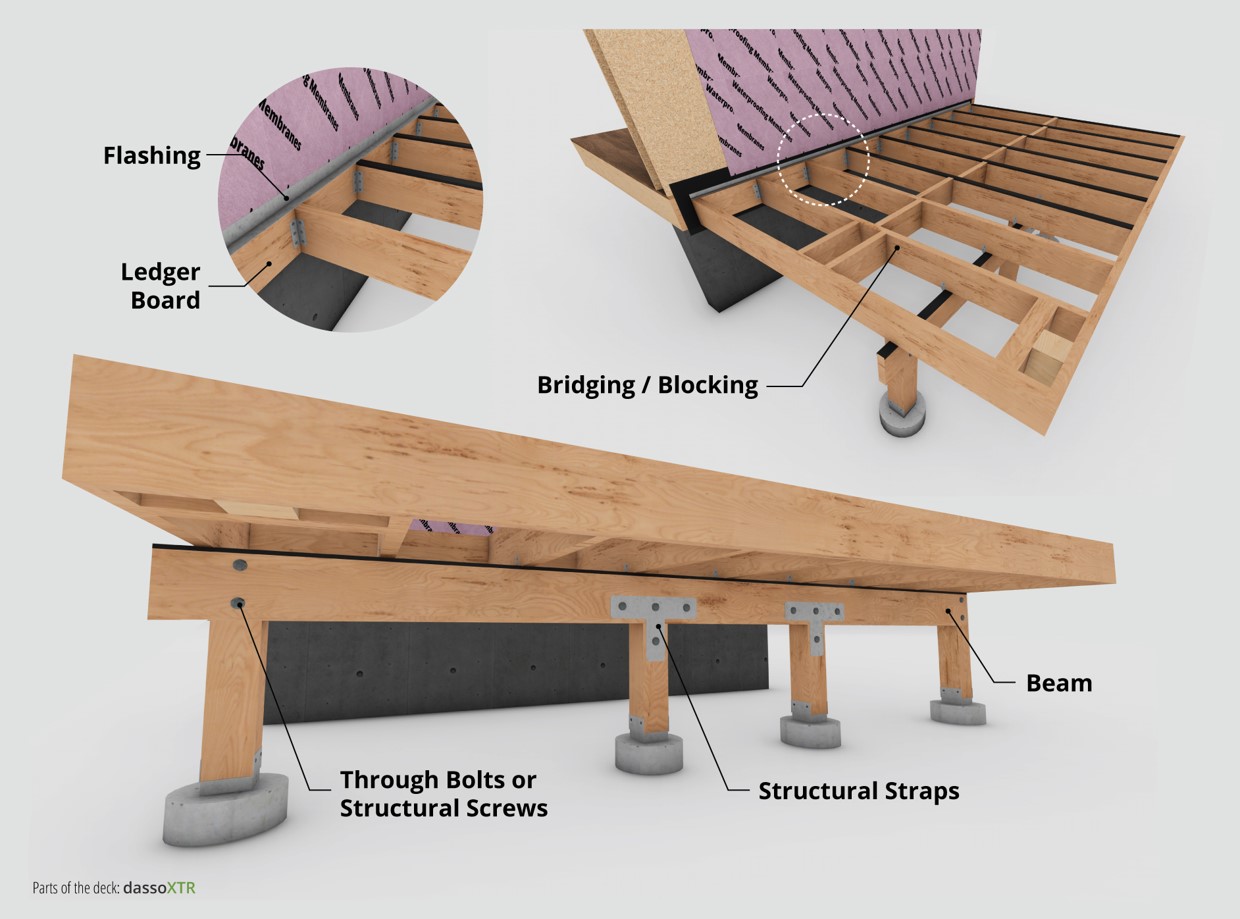
B. The Structure Frame: The Skeleton
The deck frame is the internal skeleton that provides structural integrity. A well-engineered deck framing plan ensures the deck can handle the "live load" of people and furniture.
4. Ledger Board: This is a horizontal board bolted directly to your house. The ledger board is a vital component as it ties the deck to the structural frame of the home. The ledger board needs to be protected from rain and moisture, hence the need for flashing and/or ledger tape.
5. Flashing & Flashing Tape: Flashing is an L-shaped metal or plastic strip tucked behind the siding. Adding flashing tape provides an extra layer of protection to prevent moisture damage and rot at the ledger connection.
6. Beams (Girders): The beam is the piece of wood that is parallel to the ledger board. It can be on the same level as flush-beam or below the joist as drop-beam. Once the beams are installed, they act as the primary horizontal supports sitting on the posts. These heavy beams carry the weight of the joists.
7. Joists: These are parallel boards spaced closely together (the number of joists depends on whether you use composite or wood decking). Joist hangers are used to secure the joist to the ledger or rim joist.
8. Rim Joist: It’s the outer "box" board that wraps around the ends of the joists to tie them together to create a solid perimeter.
9. Bridging/Blocking: Blocking is essential between joists to keep them from twisting or bouncing under heavy loads. Generally, you need bridging at an interval of not more than 8 feet.
C. The Surface: Materials and Design
The deck surface is what defines the style and design of your outdoor living area. Its the looks and feels of the whole deck. When choosing the right decking materials, consider maintenance and longevity. Natural materials like wood, stone or fused bamboo increase the overall value of a property and plastics usually make the whole structure look cheap.
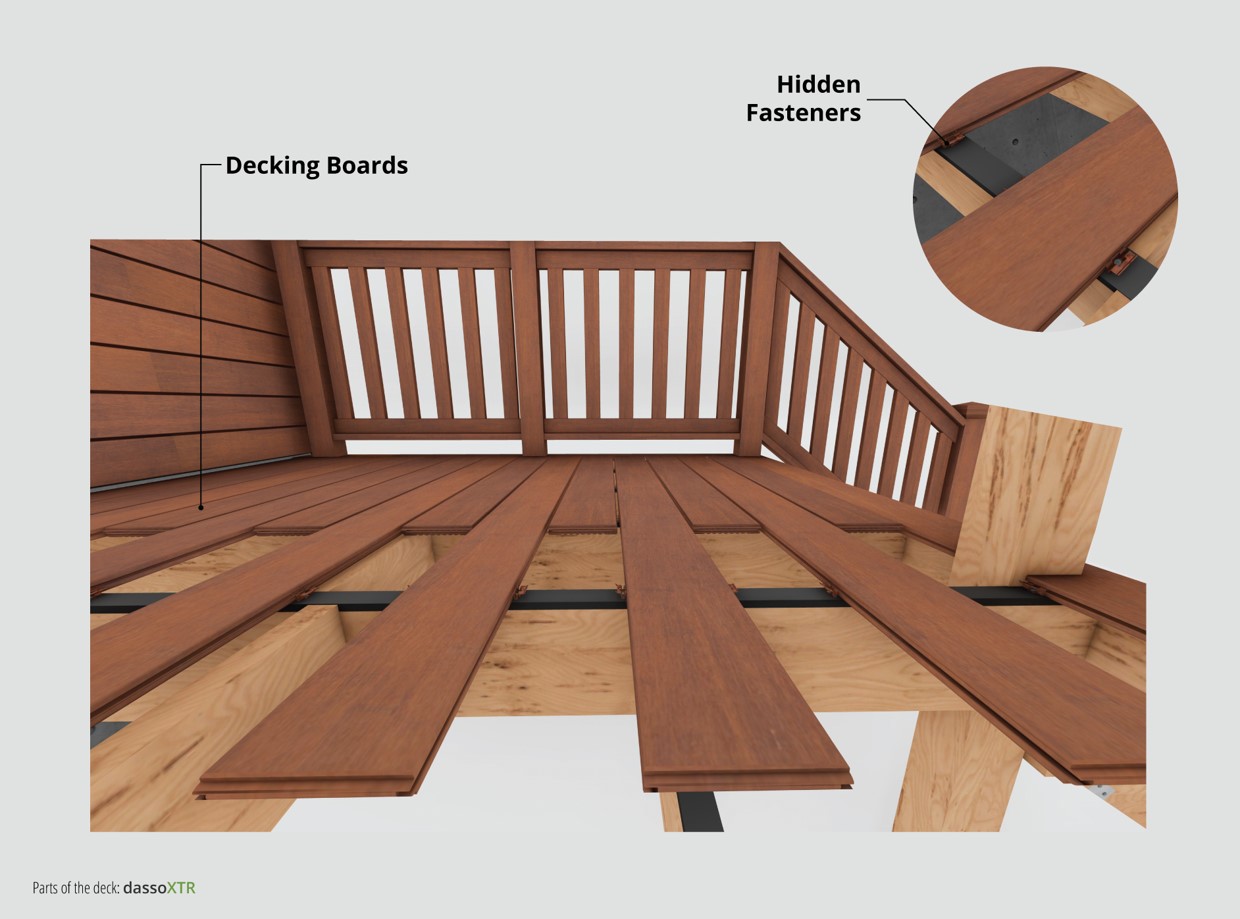
Decking Boards: You can choose from a variety of materials. Plastic composite decking (like PVC, PP and plastic corrugated plastic composite deck boards) is popular for its low maintenance, while traditional wood offers a natural classic look.
Fasteners: These are the screws, nails, or hidden clips. High-quality fasteners are needed to keep deck boards secured to its structure and prevent it boards from warping.
D. The Railing System: Safety and Style
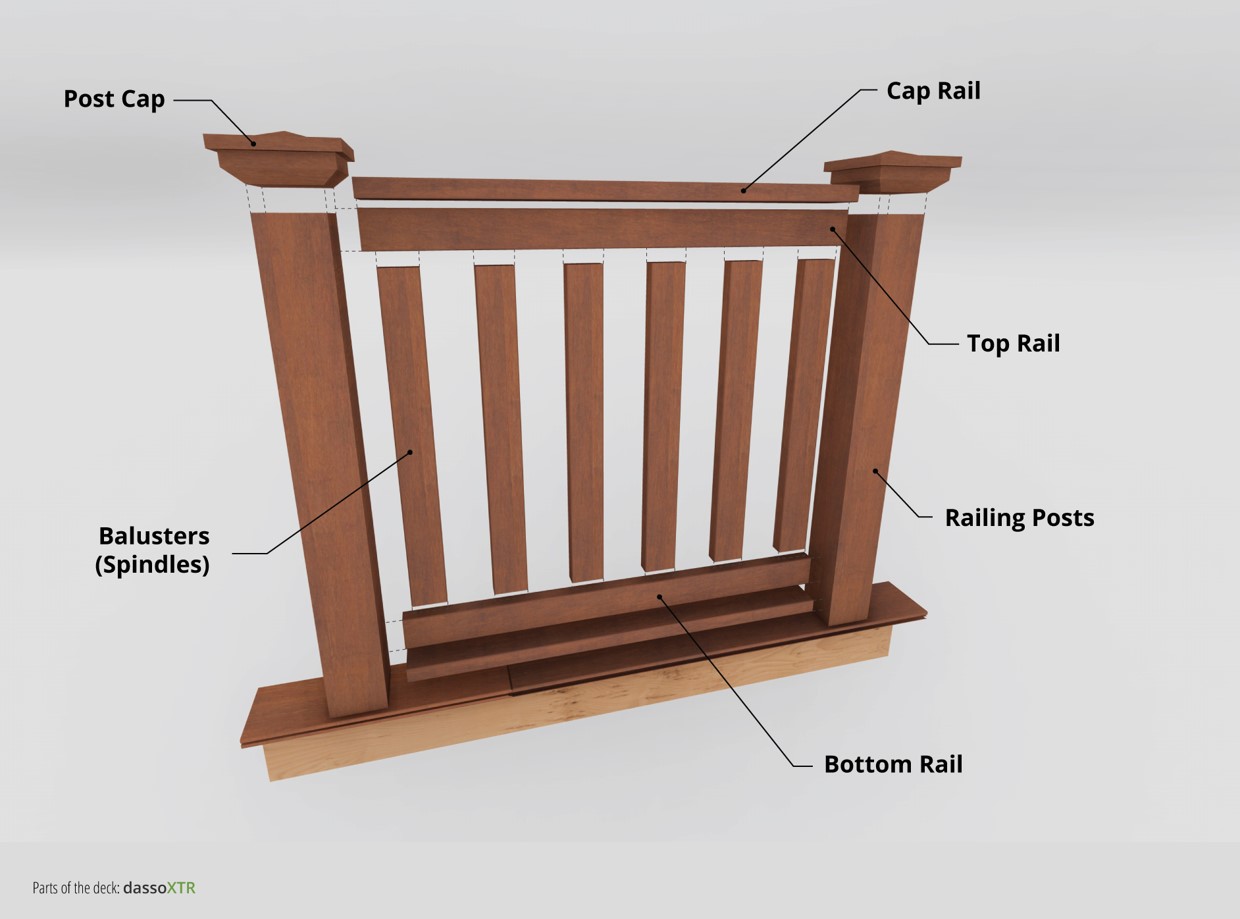
The railing system is a required safety feature for any deck above a certain height and shape. It is also a feature that defines the looks and feels of your property style. It can be made of steel, aluminum, glass or just wood as traditional wood railings or a series of combined materials.
Railing Posts: These are the heavy vertical posts bolted to the frame to hold the railings.
Rails: This includes the top rail and bottom rail. Some modern designs use aluminum for a sleek, expert look.
Balusters (Spindles): These vertical pieces prevent people from slipping through.
Cap Rail: A flat top board often placed on the rail to create a "drink-friendly" surface.
E. The Stairs: Accessing the Outdoor Space
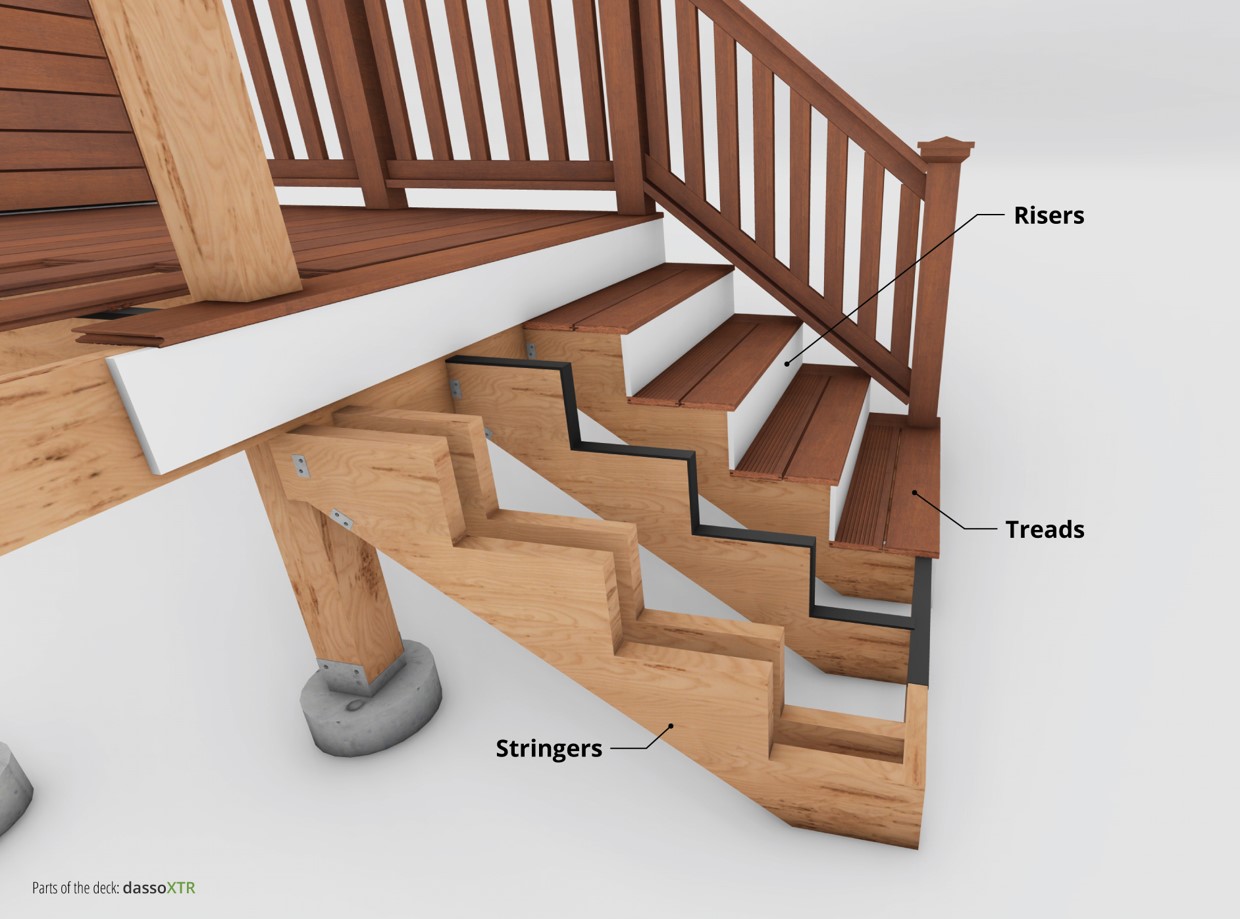
The stairs connect your deck to the yard. A flight of stairs requires precision to be safe. The stairs need to be built strong and sturdy following local code and material recommendations.
Stringers: The diagonal "zigzag" boards that provide structural support for the steps.
Treads: The flat horizontal boards you step on.
Risers: The vertical boards that close the gap between treads.
Conclusion: Planning Your Deck Project
Every deck building process should start with a deck framing diagram and a visit to the local building office to ensure you follow all building codes. From the deck drainage system to the variety of decking colors, every material choice matters. By understanding the anatomy of your deck, you ensure that your deck project results in a beautiful, secure, and long-lasting outdoor retreat.
Avery Chua
Avery Chua has over 30 years of manufacturing and product development in the wood and bamboo-based industry. He has worked across industry mostly in the pioneering stage of production involving MDF, plywood, adhesives and modern coatings. He wears many hats throughout his journey ranging from technologist, quality control, production, R&D, product development and market expansion. His knowledge comes handy in integrating usage of wood, bamboo, adhesives and coatings.