Rooftop Deck Flooring Options
By
Avery Chua
Posted on
Monday, July 20, 2026 12:04 PM
What this post will tell you:
- Seven rooftop deck flooring options, including traditional wood, composite, concrete pavers, porcelain and stone, rubber, artificial turf, and bamboo decking - with the honest pros and cons of each.
- What makes a good rooftop decking choice.
- What affects the choice of rooftop decking material.
- Building codes and other requirements.
- A practical checklist of what your roof must handle before building a rooftop deck.
- Answers to the most common questions homeowners and contractors ask before starting a rooftop deck project.
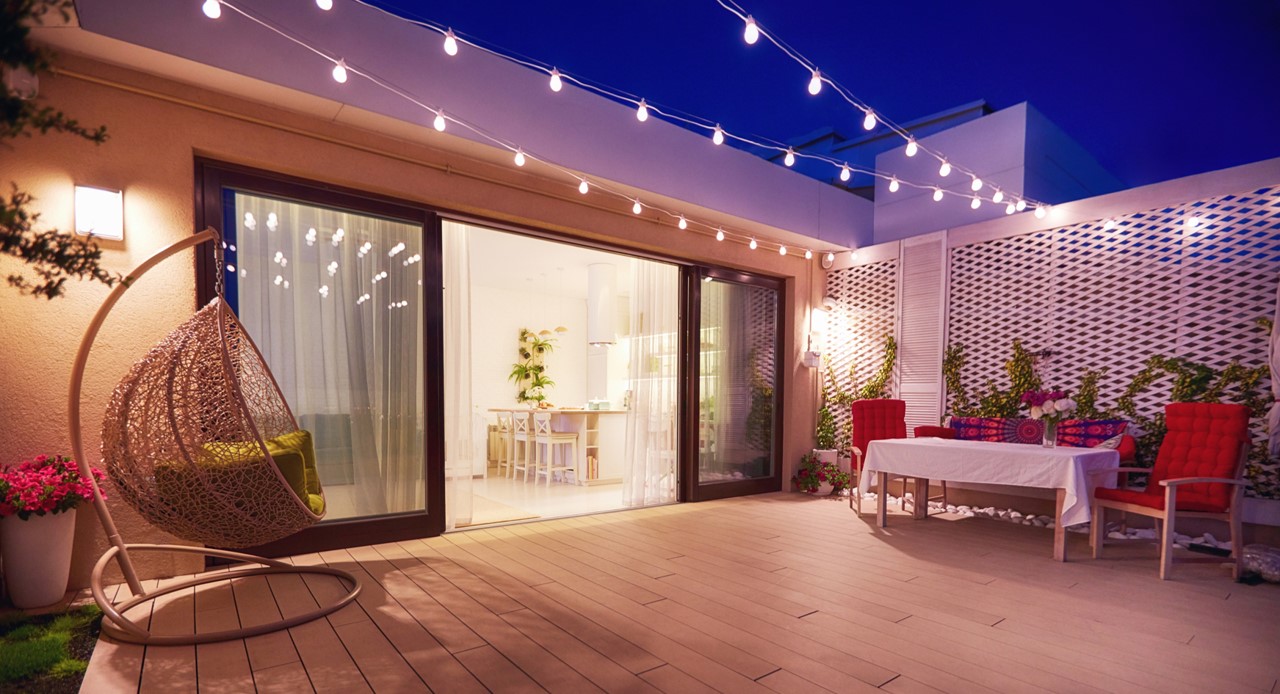
A rooftop deck transforms dead square footage into one of the most used outdoor living spaces a property can have. When done right, it adds value, expands your usable footprint, and creates a surface for everything from morning coffee to rooftop entertaining. But if it’s done wrong, it can quickly turn into an expensive headache, because of warped boards, drainage failures, and materials that can't handle the exposure.
The challenge with rooftop decks is that they're not like ground-level decks. A rooftop deck requires materials that can withstand direct sun, standing water, high winds, significant foot traffic, and the thermal movement of a building across seasons.
The roof itself must be able to support the added load, and any decking material you choose must be able to withstand far harsher conditions than a backyard patio ever faces.
To add to the challenge, building codes in most US cities have specific requirements, especially regarding fire resistance, waterproofing, and drainage. All this means that the right material for your rooftop decking isn’t just about design and aesthetics, but it’s a structural and regulatory decision.
We’ve put together a breakdown of the most common rooftop deck flooring options available, with the honest pros and cons of each.
1. Traditional Wood Decking
Traditional wood decking, such as ipe, teak, cedar, or redwood, has been a go-to decking material for outdoor living spaces for generations, and with good reason. Traditional wood has natural grain, warm tones, and a look that's hard to replicate. On a rooftop, wood deck tiles or planks can create a genuinely beautiful surface that blends well with almost any design direction.
The problem is maintenance. Traditional wood requires regular sealing, staining, or oiling to hold its color and resist rot. Left unfinished, most species will gray out and eventually crack or split under prolonged UV exposure.
Rooftop conditions are harsh. To make matters worse, there's no overhead canopy, and the surface heats up considerably in summer. Hardwoods like ipe are more resistant to rot and insect damage, but they come at a premium price and are increasingly scrutinized for sourcing.
Wood decking can also be heavy, which matters when you're working with load-bearing limits on a rooftop deck. If you are looking for a classic look for your rooftop, wood is certainly a great option, just go in with eyes open about the upkeep.
- Pros: Natural look, design flexibility, wide range of colors and species.
- Cons: High maintenance, susceptible to rot if unsealed, heavier than some alternatives, sourcing concerns with tropical hardwoods.
2. Composite Decking
Composite decking has developed significantly as an option for rooftop decks because it solves several of traditional wood's core weaknesses. Made from a blend of wood fibers and recycled plastics, composite decking can provide a surface that's resistant to rot, splinters, and insect damage, without the need for seasonal maintenance.
For a rooftop outdoor living space that sees heavy foot traffic and limited shade, that's a meaningful advantage. Most composite decking is also available in a range of colors and finishes, which means it can fit with different designs and looks.
The downside is heat retention and being slippery. Composite decking can get uncomfortably hot under direct sunlight, which is a real issue on an exposed rooftop in summer. It can also be slippery when wet. Who would want to risk the possibility of slip and fall while you are on the roof deck.
Quality also varies significantly between manufacturers, and cheaper products can fade, warp, or show surface scratching over time.
Composite also doesn't offer the same tactile feel as real wood, which matters to some buyers. It's a solid middle-ground option, but not a universal answer.
- Pros: Low maintenance, durable, resistant to rot and insects, range of colors available.
- Cons: Can get extremely hot in direct sun, slippery when wet, quality varies, doesn't feel like real wood underfoot, higher upfront cost for premium products.
3. Concrete Pavers
Concrete pavers are among the most popular choices for commercial rooftop decks and urban projects. They're exceptionally durable, can withstand heavy foot traffic without showing wear, and require minimal upkeep once installed. For rooftop deck ideas leaning toward a modern or industrial design, concrete delivers clean lines and a polished surface that's hard to argue with.
From a building code standpoint, contractors and engineers know how to calculate loads and understand installation requirements, which means concrete pavers are a straightforward choice. They can also be lifted and reset if roofing work ever needs to be done underneath, which is a practical consideration most people overlook until it becomes a problem.
The limitations are weight and cracking. Concrete is heavy, and not every roof structure can accommodate it without engineering review. In areas with significant temperature swings, concrete is prone to cracking over time if not installed properly, especially at the joints. Sealing is also necessary to keep the pavers’ appearance and prevent water absorption.
- Pros: Extremely durable, low maintenance once installed, wide design range, good for high foot traffic.
- Cons: Heavy (structural review required), prone to cracking in freeze-thaw climates, requires sealing, can be difficult to install on existing rooftops.
4. Porcelain and Stone Pavers
Porcelain and natural stone pavers have a refined look that adds style and elegance to your rooftop project. They're available in an enormous range of colors, textures, and sizes, and the better products convincingly mimic natural materials like slate, marble, or limestone, while being significantly more durable than the real thing.
Porcelain, specifically, is highly resistant to moisture, staining, and UV fading, making it perfect for rooftop conditions. Unlike natural stone, it doesn't require sealing. For a rooftop living space that's meant to impress, such as a hospitality project, a high-end residential build, or a commercial terrace, porcelain pavers are certainly a good choice.
The catch is slip resistance. Smooth porcelain can become dangerous when wet unless the product is specifically rated for outdoor slip resistance. Installation also requires precision and expertise, as mistakes are expensive to fix. And like concrete, the weight of stone pavers needs to be factored into your structural calculations before building a rooftop deck.
- Pros: Elegant appearance, highly durable, resistant to moisture and UV, no sealing required (porcelain), wide design range.
- Cons: Can be slippery when wet, heavy, expensive, professional installation required.
5. Rubber Pavers
Rubber pavers don't get as much attention as other rooftop deck flooring options, but they have their own purpose and can serve roofing needs well. Made from recycled rubber, often repurposed tires, they're slip-resistant, lightweight, and absorb impact better than hard surface materials. They also install quickly and can be cut to fit irregular rooftop shapes without specialized tools.
If your rooftop project prioritizes safety over aesthetics, rubber pavers are a good option, especially for playgrounds, fitness areas, and pet-friendly spaces. They handle foot traffic well and don't crack under temperature changes the way hard materials sometimes do.
The visual limitations are the obvious trade-off. Rubber pavers don't offer the same design quality as wood, stone, or bamboo, and they can fade or degrade with prolonged UV exposure. They're a functional surface and not a design statement.
- Pros: Slip-resistant, lightweight, easy to install, good for high foot traffic and safety-focused applications.
- Cons: Retains significant heat in direct sun, drainage issues if poorly installed, limited lifespan, requires replacement.
6. Artificial Turf
Artificial turf has a clear appeal for rooftop deck ideas: it's green, soft, pet-friendly, and requires no mowing or watering. Urban properties with green roofs and living surfaces as part of the design vision can make the most of artificial turf to create a lush, inviting outdoor living space without the requirements of planted areas. It also connects the indoors to the outdoors in a gentle, coherent way.
But the reality is more complicated. Artificial turf retains heat aggressively in direct sun, where surface temperatures can climb significantly above ambient air temperature on a hot afternoon. When the sun is at its peak, it would be difficult to stand on it or use the area.
Another issue is drainage: if water pools under the surface, mold becomes a real problem. The material also has a finite lifespan and will need replacement, unlike harder decking options. Finally, while it's marketed as low-maintenance, it still requires periodic cleaning and brushing to keep it looking presentable under heavy use.
- Pros: Soft surface, pet-friendly, adds visual greenery, no watering or mowing required.
- Cons: Retains significant heat in direct sun, drainage issues if poorly installed, limited lifespan, requires replacement.
7. Bamboo Decking: The High-Performance Alternative
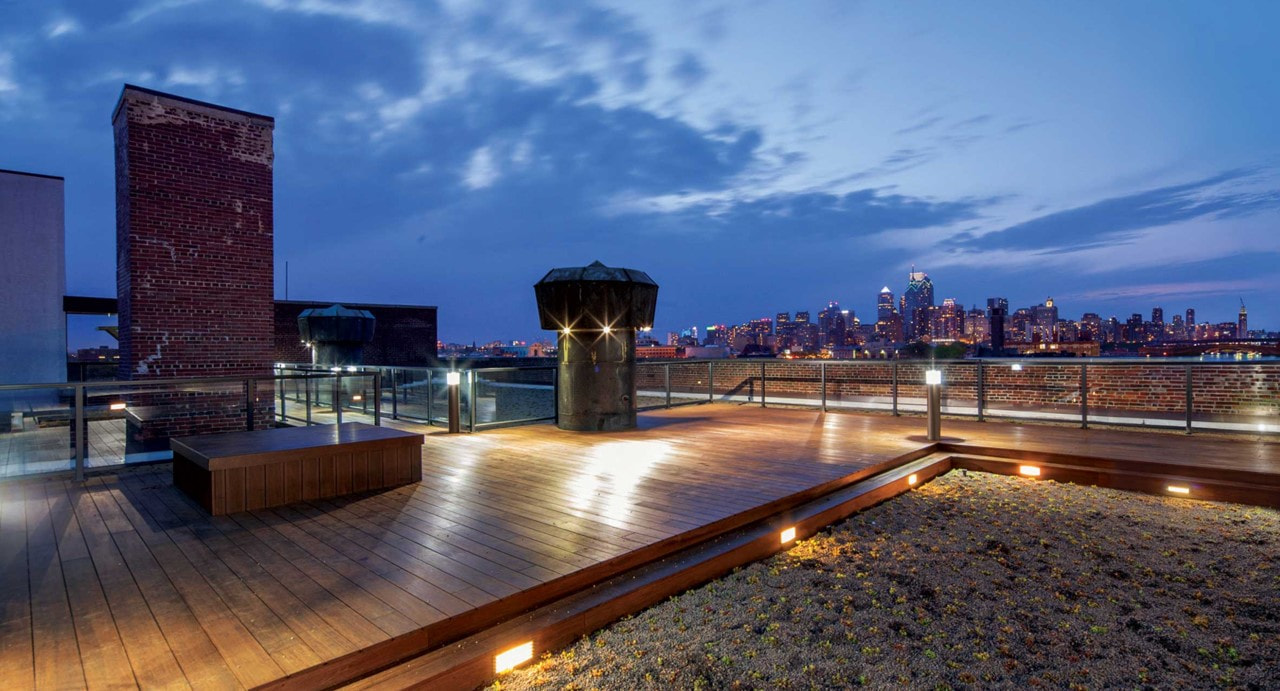
Bamboo decking or more specifically, Fused Bamboo decking has moved well beyond its early reputation as a novelty material. Fused Bamboo products, designed specifically for exterior use with thermalized or crystalized fused compressed bamboo strands, now produce a decking material that competes directly with hardwoods in durability without their weaknesses.
As a rooftop decking material, bamboo’s performance characteristics are outstanding. Bamboo decking is dimensionally stable, meaning it handles thermal expansion and contraction better than many traditional wood species. It's resistant to rot, moisture, and insect damage without chemical preservatives like ACQ or CCA, which matters for both longevity and building code compliance in projects that require non-leaching decking materials.
High-quality engineered bamboo products like Fused Bamboo can also carry a Class A Fire Rating, a factor that's increasingly required by building codes in California and other western states under WUI (Wildland-Urban Interface) regulations. Bamboo decking can be a fitting choice for any rooftop project that must withstand high fire risk conditions.
On the design side, bamboo decking provides the warm, natural look of traditional wood without the same maintenance demands. It's available in multiple tones and finishes, holds up well under foot traffic, and works with pedestal systems commonly used in rooftop deck installations. Bamboo deck with pedestal systems lets the surface float above the waterproofing membrane rather than penetrate it, which is important for any roof deck construction.
The sustainability angle is also real. Bamboo grows to harvest maturity far faster than hardwood timber, and quality products carry FSC certification. For rooftop projects pursuing LEED points or green building credentials, bamboo decking can contribute to those goals in ways that composite decking and concrete cannot.
- Pros: Durable, rot and insect-resistant without chemical preservatives, Class A Fire Rated (qualifying products), dimensionally stable, FSC-certified options available, works with rooftop pedestal systems, lower maintenance than traditional wood.
- Cons: Premium pricing compared to basic composite or pressure-treated wood; quality varies between manufacturers, so sourcing matters.
What to Know Before Building a Rooftop Deck
Regardless of the decking material you select, any rooftop deck project starts with a structural assessment.
Structural assessment
The roof must be able to handle the combined static and live loads of the surface material, furniture, occupants, and any additional features, such as planters or outdoor kitchens.
Building codes
Building codes vary by city and state, but permits are usually required, and in many jurisdictions, engineering sign-off is mandatory before construction begins.
Waterproofing and drainage
Waterproofing and drainage are all-important. On a flat roofing with membrane, the deck sits on top of the supporting structure which sits on the building's skin. Addition protection is added to the membrane, and it protects that membrane and prevents water from seeping through into the building. On a pitched roof, rubber or plastic sleeves are usually use on the stile or post of the deck structure so that drainage is never an issue. Decks are build with 1% slope which is hardly felt and will always drain to dry.
Choosing the Right Decking Material
The right decking material depends on your project conditions, and especially the roof structure, local climate, design goals, foot traffic expectations, and budget. With those factors mapped out, the options above give a clear picture of what each surface can and can't deliver, and which one is likely to hold up best for the long run.
Interested in finding out more about using bamboo as a rooftop decking option? Talk to dassoXTR today!
Takeaways
- Low maintenance is not the same as no maintenance. Composite and rubber deck flooring options reduce upkeep but don't eliminate it. Factor in long-term care costs alongside the initial project budget.
- Building codes increasingly require Class A fire-rated decking, particularly in California and other states with WUI regulations. Check local requirements before selecting a decking material, not after.
- Rooftop decks are not the same as ground-level decks. The decking material you choose must withstand full sun exposure, wind, water, and thermal movement. These conditions eliminate several materials that work fine in sheltered outdoor living spaces.
- Bamboo decking combines the natural look of traditional wood with better dimensional stability, no chemical preservatives, and fire ratings that meet modern building codes. It’s a strong option for rooftop decks where both performance and appearance are priorities.
- Weight matters. Concrete and stone pavers offer great durability, but the roof must be able to support the load. Always get a structural assessment before building a rooftop deck.
FAQs
Do I need a permit to build a rooftop deck?
In most US cities, yes. Rooftop decks usually require a building permit, and many jurisdictions also require a structural engineer to review the plans before construction begins. Requirements vary by location, so check with your local building department early in the planning process, not after you've already selected materials.
How much weight can a rooftop deck support?
That depends entirely on your building's structure, which is why a structural assessment is required before building a rooftop deck. As a general reference point, most rooftop deck systems are designed to handle a live load of 40 to 100 pounds per square foot, but your specific roof must be evaluated by a licensed engineer before you can confirm what it can safely carry.
What is the most low-maintenance rooftop deck flooring option?
Porcelain pavers and engineered bamboo decking both rank well on maintenance. Porcelain requires no sealing and resists staining and fading. Engineered bamboo decking doesn't need the regular oiling or staining that traditional wood requires and holds up well under foot traffic without chemical preservatives. Composite is another solid, low-maintenance option, though heat retention in direct sun is a trade-off worth remembering on an exposed rooftop.
Can I install rooftop decking myself?
Some deck flooring options, like rubber pavers and interlocking wood or bamboo tiles, are designed for DIY installation. However, rooftop deck projects involve waterproofing membranes, drainage design, and load considerations that go beyond a standard backyard deck build. For anything beyond a basic tile-over-existing-surface project, professional installation is strongly recommended for safety, proper drainage, and your roof’s warranty.
Avery Chua
Avery Chua has over 30 years of manufacturing and product development in the wood and bamboo-based industry. He has worked across industry mostly in the pioneering stage of production involving MDF, plywood, adhesives and modern coatings. He wears many hats throughout his journey ranging from technologist, quality control, production, R&D, product development and market expansion. His knowledge comes handy in integrating usage of wood, bamboo, adhesives and coatings.