What Is Moso Bamboo the Complete Guide | dassoXTR
By
Avery Chua
Posted on
Tuesday, October 20, 2026 1:24 PM
Moso Bamboo: The Ultimate Guide to Nature’s Engineered Wonder
What You’ll Learn in This Post
- What makes this bamboo species perfect for industrial timber.
- Its environmental advantages and harvest sustainability.
- The thermal process of turning raw moso fibers into high-density bamboo.
- What Moso bamboo is, its biological background, and how it grows.
- Commercial applications for Moso bamboo.
Modern sustainable architecture requires materials that combine strength with a low environmental impact. Specially developed plant fibers offer these, plus element resistance comparable to conventional wood and steel. That is why architects, builders, and developers increasingly use them in construction. Moso bamboo leads this revolution.
What Is Moso Bamboo?
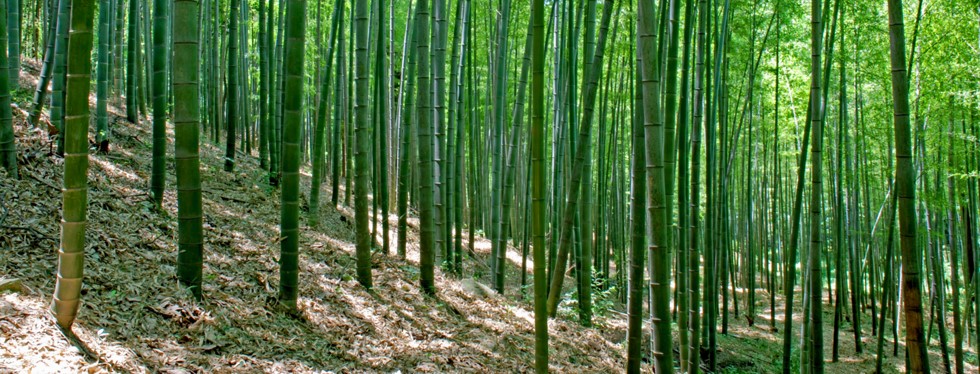
Known scientifically as Phyllostachys Edulis, Moso Bamboo is a variety of temperate timber that is one of the largest and most economically valuable plant types in the world. A running bamboo species that is native to China, it grows well in subtropical environments, covering millions of hectares across mountainous landscapes in East Asia. It’s not farmed; it’s a natural grass that helps support both rural forestry economies and international sustainable construction manufacturing.
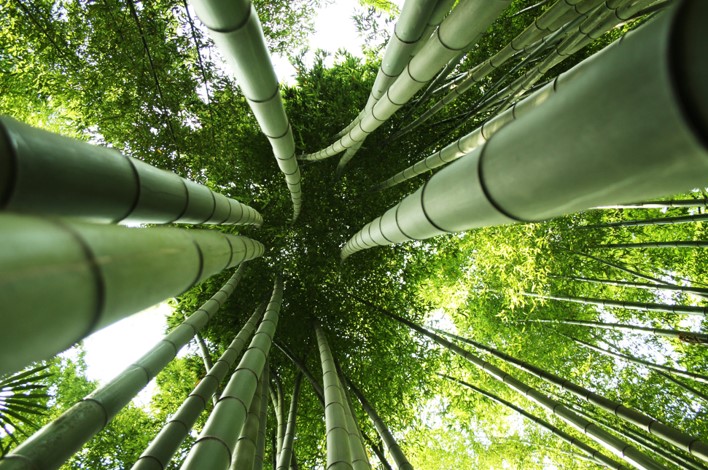
While softwood and other timbers like tropical hardwood take 40 to 100 years to reach full height, moso reaches 60 to 70 feet in a single growing season. After about 4 to 5 years, its culm walls thicken and lignify, developing the dense structural fibers required for commercial processing.
The Properties of Timber Bamboo
Raw bamboo's exceptional tensile strength comes from its thick, tube-like vascular bundle structure, which is naturally built to withstand harsh winds, heavy snow, and environmental stress.
Main Material Characteristics
- High tensile strength: Moso’s fiber structure holds an average tensile strength of around 28,000 PSI, rivaling steel’s structural strength.
- High fiber density: Its thick fiber walls provide heavy-duty strength, ideal for industrial processing.
- Fast growth cycle: Moso bamboo reaches maturity in 4 to 5 years. It can be continuously harvested without clear-cutting entire forest ecosystems.
- Natural carbon sink: Carbon is sequestered at a much higher rate per acre than traditional pine or oak forests.
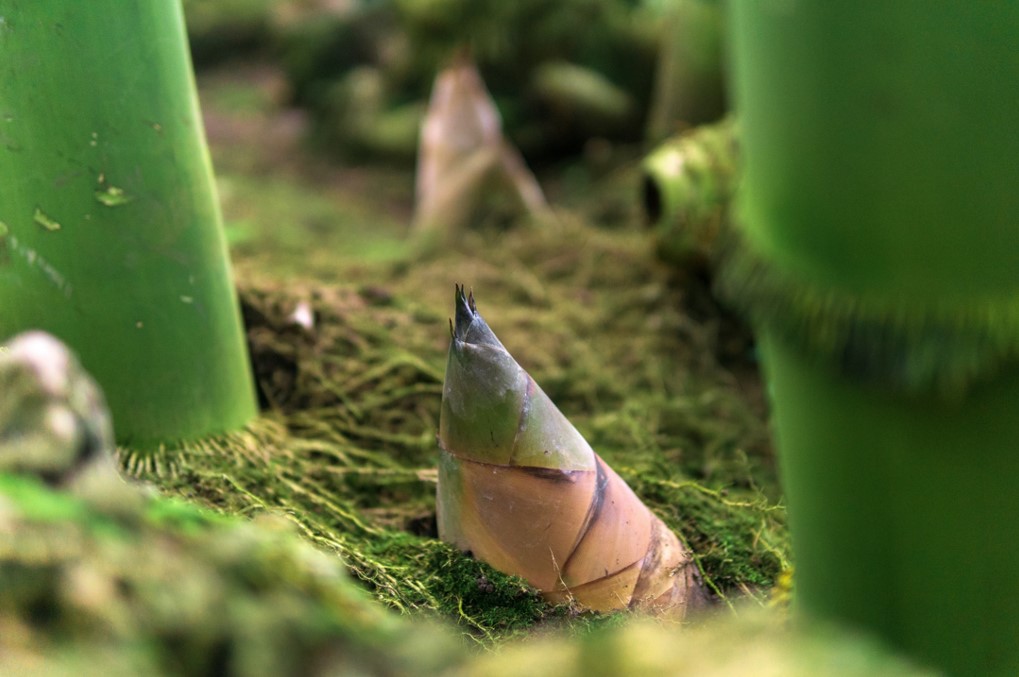
Because Moso bamboo is part of the grass family (Poaceae), harvesting the stalks does not kill the parent organism. The underground rhizome system stays intact and sends up new bamboo shoots every spring. This ingenious design means there is no need for replanting, soil tilling, or chemical fertilizers.
Commercial Uses and Industrial Applications
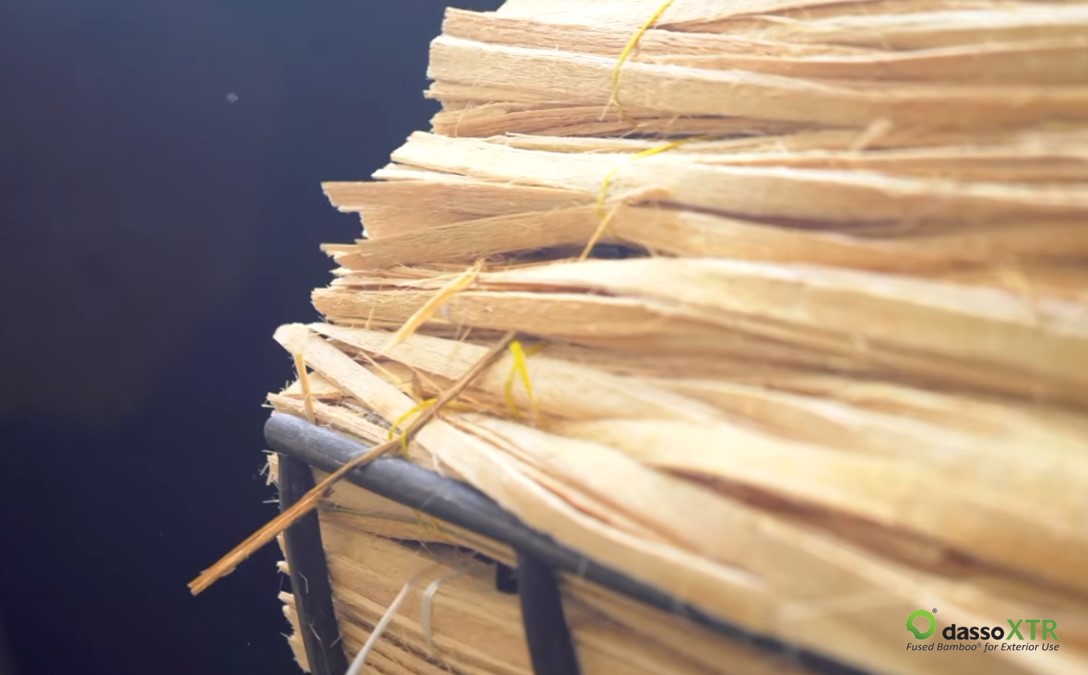
Bamboo was traditionally used for scaffolding, farming implements, and weaving products. Today, however, modern manufacturing processes are transforming harvested stalks into high-density composite materials. The process strips, crushes, heats, and compresses the raw fiber into a strong material that serves as a perfect alternative to endangered tropical hardwoods.
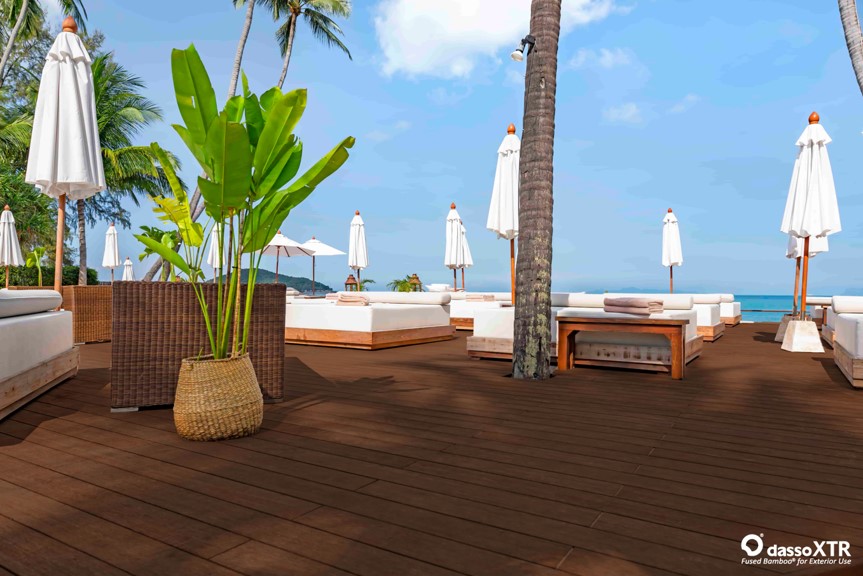
Modern engineered bamboo products serve many uses, including residential and commercial decking, rain-screen exterior wall cladding, and commercial flooring.
The plant fibers undergo special heat treatments that caramelize the sugars and make the compound resistant to rotting, mold, fungus, and insect attacks. The resulting fused material is dimensionally stable and rated Class A for fire resistance, making it perfect for outdoor applications in tough environmental conditions.
Fused bamboo is an ideal choice for busy commercial facilities, waterfront boardwalks, or city parks, because it withstands weather changes without warping, cupping, or splitting. It also resists heavy foot traffic and requires little ongoing maintenance once installed, especially compared to timber.
Environmental and Economic Benefits
Few building materials are as environmentally friendly as moso. From a commercial sustainability viewpoint, fast-growing bamboo means tropical rainforests are not depleted for timber. Its high yield per acre supports a consistent global supply chain without habitat destruction.
Likewise, carbon accounting studies show that harvested, long-life architectural products retain captured carbon throughout their lifetime, keeping a negative carbon footprint from cradle to grave. This makes it an ideal construction material for commercial applications that require LEED certification or fall under environmental regulations.
Developers can earn green building credits simply by including fast-growing organic products in their urban developments, while leaving wild, biodiverse habitats untouched.
Modern Material Innovation with dassoXTR
Modern designers and architects looking for high-durability exterior materials often use composite materials and engineered timber for their projects, because untreated wood doesn’t have the weather durability needed for long-term outdoor exposure. With advanced thermo-processing, moso bamboo changes the equation.
At dassoXTR, we use patented fused bamboo technology to extract natural fibers from mature timber stalks, mix them with phenolic resin, and fuse them under pressure and extreme heat. The result is a highly durable product that offers superior hardness and dimensional stability. It is also termite-resistant and comes in different colors, making it perfect for exterior decking, rain-screen siding, and custom architectural designs.
For premium exterior architectural solutions, check our selection of fused bamboo here at dassoXTR!
_______________________________________________________________________________________________________________________________________________________________________________________________________________________
Frequently Asked Questions
Is Moso bamboo stronger than traditional oak or teak?
Yes, it is stronger. When the bamboo is processed into fused high-density composites, its Brinell hardness rating exceeds 9.5 kg/mm², making it much harder and more scratch-resistant than red oak, white oak, or natural teak timber.
How quickly does a stalk reach commercial harvest maturity?
A bamboo stalk grows to full height in just a few months, but the cell walls need 4 to 5 years to fully lignify, harden, and develop the density needed for structural manufacturing applications.
Does harvesting kill the parent plant?
Harvesting does not kill the parent plant; it leaves the subterranean rhizome root system undamaged, allowing it to grow back naturally by next spring. No manual replanting is needed, and the soil isn’t disturbed during harvesting.
Can engineered exterior decking handle extreme weather conditions?
Yes, it can. The bamboo is processed via thermal treatment, which makes it resistant to moisture absorption, fungal decay, insect damage, and extreme temperature fluctuations. Fused bamboo materials from dassoXTR carry Class A fire resistance and long commercial warranties of up to 50 years.
Why is this plant species better than softwoods for green building?
Fused bamboo yields significantly higher biomass per acre than softwoods. It also regenerates rapidly without deforestation and absorbs substantial carbon dioxide emissions during its rapid growth cycle.
Avery Chua
Avery Chua has over 30 years of manufacturing and product development in the wood and bamboo-based industry. He has worked across industry mostly in the pioneering stage of production involving MDF, plywood, adhesives and modern coatings. He wears many hats throughout his journey ranging from technologist, quality control, production, R&D, product development and market expansion. His knowledge comes handy in integrating usage of wood, bamboo, adhesives and coatings.