How Strong Is Bamboo?
By
Avery Chua
Posted on
Friday, July 24, 2026 1:33 PM
Bamboo is recognized as being one of the most incredible natural construction materials that exist in the world today. Its high-quality performance characteristics for outdoor decking and structural builds have made it the go-to choice for architects and builders for many years now. However, how strong is bamboo and how does it measure up in terms of strength when compared to more traditional materials such as hardwood?
What You'll Learn
In this article, you will discover why bamboo has such impressive structural properties, how fused bamboo fares against hardwoods, what its maintenance needs are, and why bamboo is the preferred choice for outdoor decking solutions in both commercial and residential applications. You’ll also discover how bamboo's natural properties are improved with modern manufacturing to offer long-term durability in all outdoor weather conditions.
How Strong is Bamboo, and What Gives bamboo it’s Strength?
There are thousands of species of bamboo, though most bamboo species have strong fiber, not all species are well studied and commercially popular. In this discussion, we will discuss the benefits of bamboo, specifically focusing on Moso Bamboo (Phyllostachys pubescens).
Bamboo is very strong, so much so that it has frequently been compared to steel due to its amazing tensile strength. Tensile strength is what a material's resistance to breaking when you try to pull it apart. The comparison is convincing because it is based on the strength-to-weight ratio of steel against bamboo fiber. Inside bamboo are natural fibers that consist of very long and coarse cellulose strands. That cellulose strands form a very solid structure that is able to endure heavy loads and huge pressure.
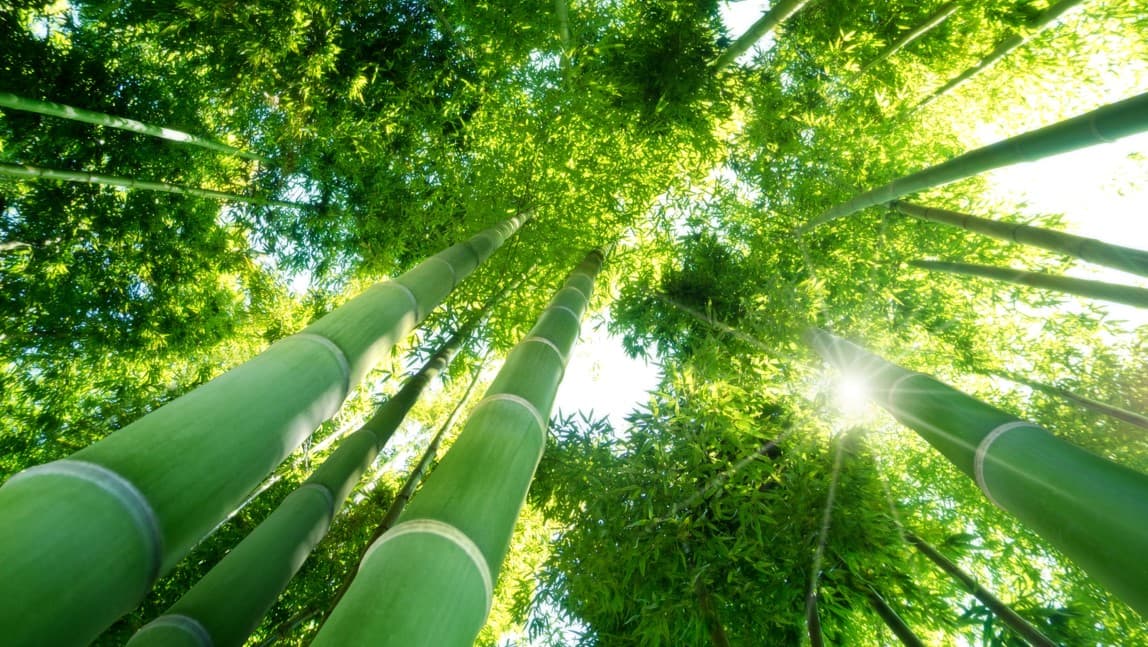
There are several reasons for bamboo’s strength as a culm; the most important is the placement of bamboo’s fibers. Contrary to trees, where the growth goes outwards in rings as a solid cylinder, bamboo fibers are concentrated near the outer wall of the stalk and the cylinder is hollow in its core. This aspect makes for a very strong, sturdy, and lightweight material.
Bamboo has long been recognized as a material that can resist pressure, shock, and harsh environments if it is processed properly, but still, not all bamboo items are made equally. The most up-to-date engineered bamboo options, especially Fused Bamboo, bring the features of bamboo to a completely new level. The patented Fused Bamboo® technology that dassoXTR uses eliminates sugars and starches in bamboo fibers through a heat-processed, then encapsulated the fiber with phenolic resin before fusing the strands together through pressure and heat. By doing this, it makes the bamboo stronger, stabler, more durable, and increases its resistance against insects, fungi, and decay.
This results in decking that has excellent strength and durability, sustainability, and resistance to harsh environmental conditions.
Bamboo strength comparison
The table below shows how fused bamboo compares to common hardwood species:
|
Material
|
Brinell Hardness (N/mm²)
|
Density (kg/m³)
|
Swelling Rate (%)
|
|
dassoXTR Fused Bamboo
|
80–100
|
1150–1200
|
0.6
|
|
Oak
|
34–37
|
680–720
|
9.6
|
|
Merbau
|
46–52
|
830–880
|
4.4
|
|
Ipe
|
60–70
|
1000–1200
|
5.1
|
|
Cumaru
|
57–65
|
1050–1150
|
7.7
|
The above statistics show that fused bamboo can outperform several premium hardwoods in hardness while still being able to maintain excellent dimensional stability.
Comparing Bamboo and Hardwood
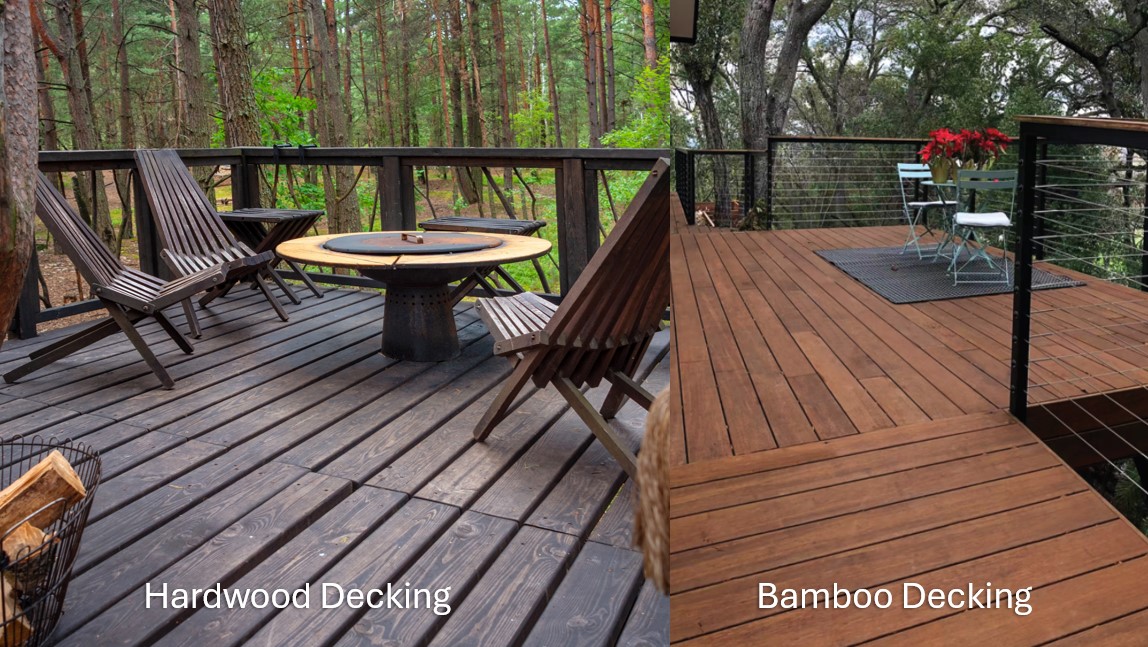
For decking construction, buyers often compare different options available, comparing bamboo against natural hardwood lumber, which includes varieties such as Ipe, Cumaru, and Merbau.
Natural hardwoods are appreciated for their aesthetics and strength and have been the standard for many years; however, engineered bamboo has quite a few advantages when compared to natural lumber.
Since bamboo matures a lot quicker than hardwood trees, which require many decades to mature to a usable size to harvest. Bamboo is able to be harvested between 4 and 6 years after planting. This aspect makes bamboo much more renewable than hardwood.
Fused bamboo also offers amazing structural properties as well. When tested, it has shown a Janka hardness score of around 3,850 pounds, which is greater than that of Ipe hardwood. It has also shown huge resistance to being dented, bent, or suffering from insect damage or general decay.
Its consistency is another advantage. Fused bamboo boards do not have any knots or uneven grain patterns like natural woods have. The process of fused bamboo makes a much more consistent board, which offers more consistent load distribution, minimizing shrinking and expansion. The consistent structural features of engineered bamboo give it higher tensile strength and a more predictable and stable conduct when used outside in the elements.
What Maintenance Does Bamboo Require?
Much like every other natural decking material, bamboo requires regular upkeep to keep its appearance looking good.
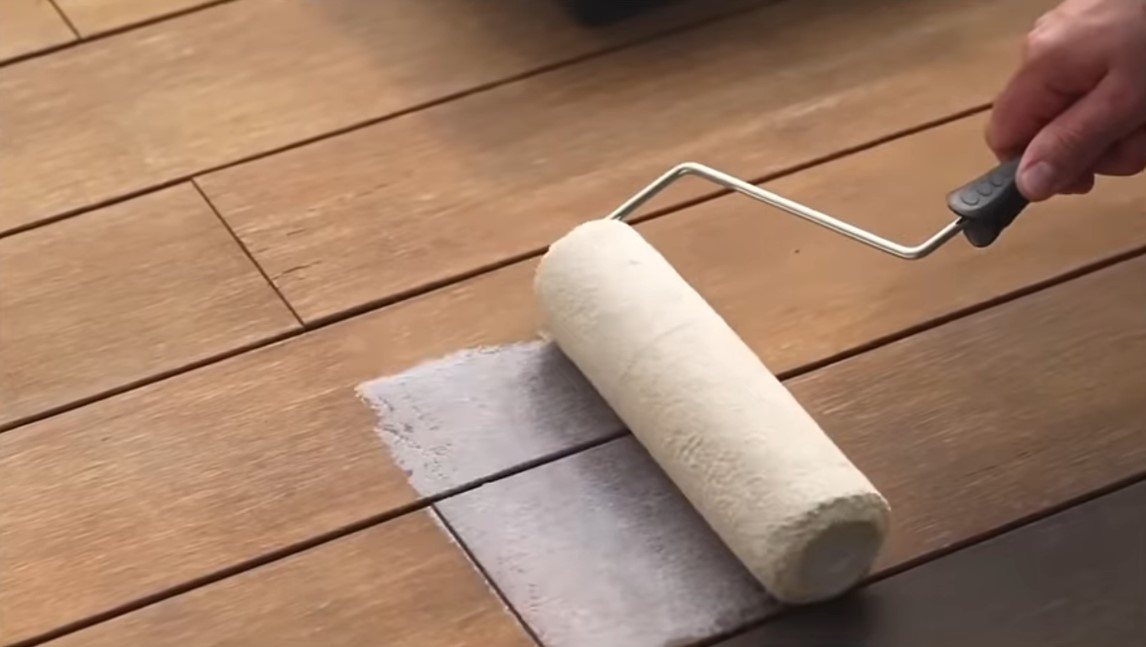
When used outdoors, bamboo can be cleaned periodically to get rid of any dirt or pollen. An outdoor decking oil could even be used, depending on how much sun exposure the decking receives, to maintain the material's original coloring. As time goes by, bamboo tends to turn a silver gray due to UV exposure, much like many types of hardwood. This slight color change only affects the bamboo's appearance and not its structure or integrity.
The excellent performance qualities of fused bamboo in outdoor use derive from the fact that the materials used in its manufacture lack the nutrients that attract molds, fungi, and insects. The thermal treatment, together with resin impregnation, helps in protecting the board from any biological degradation while retaining its stability.
When maintained properly, fused bamboo can last for many years in residential or commercial applications, and dassoXTR’s fused bamboo products are all backed by 50-year warranties.
Why is Bamboo the Ideal Option for Decking?
For decking, bamboo offers an unmatched combination of performance, sustainability, and aesthetics. Its deck planks have unique strength, impact resistance, and dimensional stability, while also giving a naturally appealing appearance that is suitable for various architectural styles. In addition, when compared to hardwood, it does not suffer from insect erosion or decay, thus maintaining its properties over long periods of time. Its manufacturing process makes it free of knots and grains, giving off a much more uniform look and predictable performance.
Bamboo's other great attribute is its sustainability. It takes far less time for bamboo to grow to harvestable size compared to most hardwoods, making it an excellent option for decking that needs to be sourced from environmentally responsible materials.
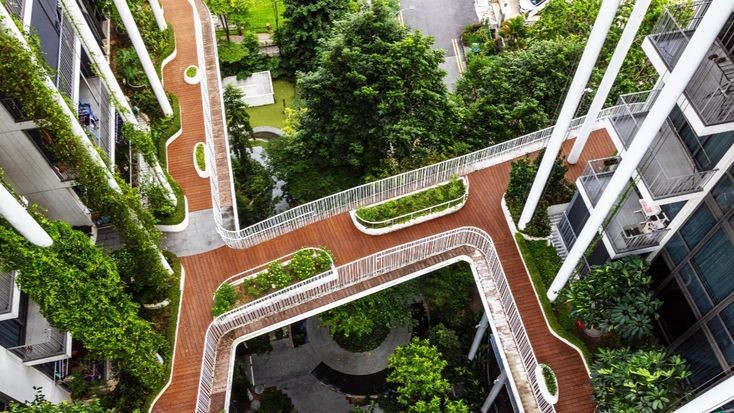
High-quality fused bamboo is the ideal choice for both commercial and residential bamboo decking projects and also for walkways, boardwalks, roofs, and outdoor areas used by hospitality businesses. Bamboo provides a very viable option when searching for a decking material that can withstand harsh weather conditions and maintain its visual appeal over many decades.
Frequently Asked Questions
Is bamboo stronger than hardwood?
Engineered Fused Bamboo is a very tough material and is as hard as or sometimes stronger than hardwood. There are differences in the performance of various products, but high-quality fused bamboo products can easily compete with certain woods like Oak, Cumaru, or even Ipe.
What makes Fused Bamboo different from regular bamboo?
Regular bamboo and fused bamboo differ in certain ways. Fused bamboo has been subjected to heat and strand treatment, as well as compression and resin impregnation, which makes it a very durable material intended for outdoor use and harsh conditions.
Does bamboo decking rot?
High-quality, properly manufactured fused bamboo is very resistant to rot. The nutrients that attract insects and fungi are all eradicated during the production process.
How long does bamboo decking last?
Well-maintained, high-quality fused bamboo will last a long time, exceeding many decades. dassoXTR’s fused bamboo products all have a warranty of 50 years.
Is bamboo environmentally friendly?
Yes, bamboo is environmentally friendly; it regenerates rapidly and can typically be harvested within 4–6 years, making it one of the most renewable building materials available.
Avery Chua
Avery Chua has over 30 years of manufacturing and product development in the wood and bamboo-based industry. He has worked across industry mostly in the pioneering stage of production involving MDF, plywood, adhesives and modern coatings. He wears many hats throughout his journey ranging from technologist, quality control, production, R&D, product development and market expansion. His knowledge comes handy in integrating usage of wood, bamboo, adhesives and coatings.