Best Dock Decking Material
By
Avery Chua
Posted on
Friday, September 4, 2026 2:31 PM
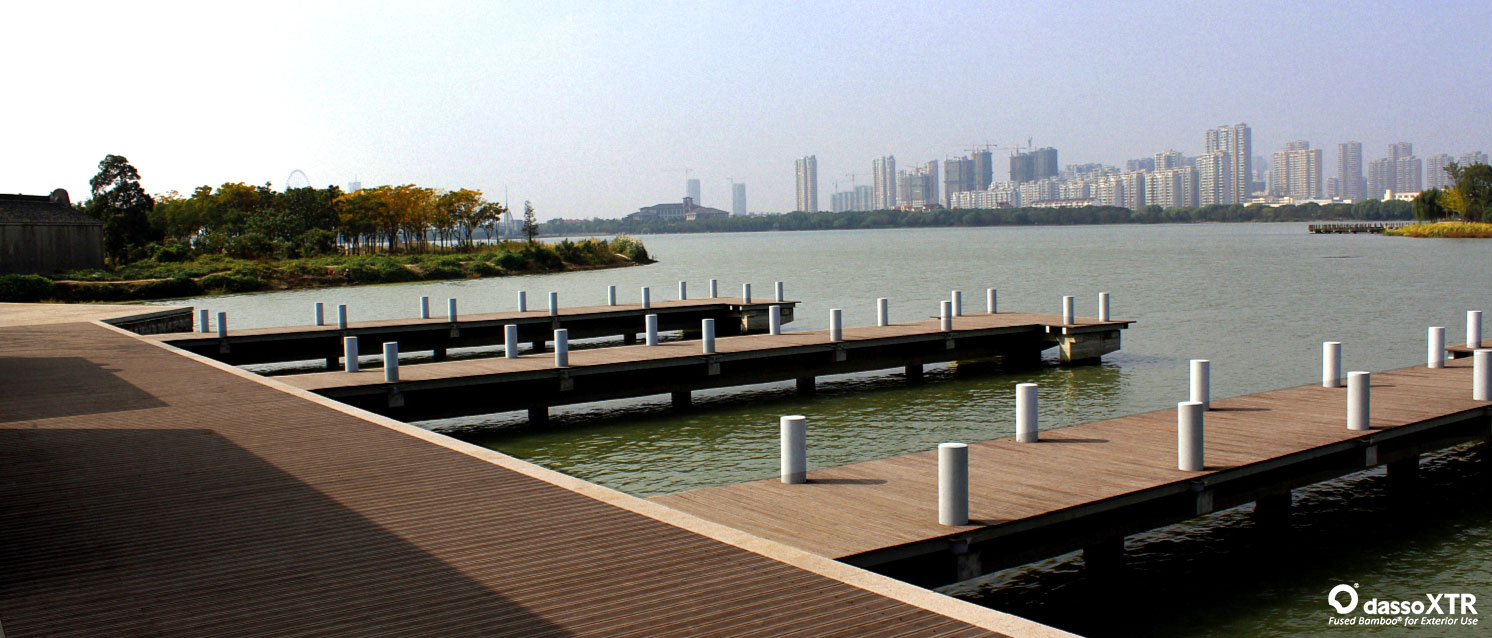
A Comprehensive Guide for Marine Installations
What You’ll Learn in This Post
- Why marine decking demands a different approach than backyard decking.
- The four biggest environmental threats to dock materials.
- A side-by-side comparison of the five main dock decking materials.
- Why fused bamboo is a superior modern solution.
- The key performance factors to evaluate before you specify.
- Answers to the most common dock decking questions.
When building or modernizing a waterfront pier, you need to assess how materials perform under constant moisture, sunlight, and heavy foot traffic. The best decking material for a marine setting differs greatly from what you'd choose for a backyard deck. A boat dock is constantly exposed to the elements, including tides, strong UV rays, algae growth, and saltwater.
To choose the right dock decking material for your needs, consider factors like long-term strength, annual maintenance needs, lifetime cost, and underfoot safety. While traditional building materials such as pine, tropical wood, composite, and aluminum have long been the mainstays of marine structures, new materials like fused bamboo are becoming more popular for waterfront construction.
Let’s take a close look at what types of decking materials are available so you can pick the best solution for your waterfront investment.
The Challenges of Marine Waterfront Environments
A deck installed over water comes with quite a few challenges, as traditional building methods don't always last long in an environment with constant exposure to moisture and water immersion. Any decking material must meet these to be a reliable choice for marine contractors and homeowners:
- UV Degradation and Thermal Expansion: Causes open surfaces to swell, crack, discolor, and become extremely hot to the touch.
- Continuous Moisture Exposure: High tides, constant splashing, and standing water result in swelling, rotting, and decay in traditional wood.
- Biological and Chemical Attack: Saltwater corrodes metal, while marine organisms, mold, fungi, and bugs affect uncoated organic matter.
- Safety and Foot Traffic Hazards: Wet boards become slippery, increasing the risk of falling into deep water. Moreover, warping and splintering make them dangerous to walk barefoot on.
Assessing the Top Dock Decking Materials
Five main materials are commonly used for dock construction. Each material class offers different grades of cost, structural strength, aesthetic appeal, and ongoing maintenance.
|
Material Category
|
Avg. Material Cost
|
Expected Lifespan
|
Annual Maintenance
|
|
Fused Bamboo Decking
|
$10 – $18 / sq. ft.
|
30+ Years
|
Low
|
|
Pressure-Treated Wood
|
$5 – $10 / sq. ft.
|
10 – 15 Years
|
High (Sanding/Sealing)
|
|
Exotic Tropical Hardwood
|
$15 – $25 / sq. ft.
|
25 – 40+ Years
|
Moderate to High
|
|
Composite & PVC Decking
|
$12 – $22 / sq. ft.
|
25 – 30 Years
|
Low
|
|
Aluminum Decking
|
$15 – $28 / sq. ft.
|
30 – 50+ Years
|
Very Low
|
1. Fused Bamboo: The Superior Modern Solution
Strong and reliable, Fused Bamboo is perfect for marine dock construction. Made from fast-growing bamboo stalks, raw fibers undergo a patented heat-carbonization and compression process with phenolic resins. This process creates a natural composite board made of 87% bamboo and 13% phenolic resin, outperforming conventional materials in terms of structural strength and durability.
Fused Bamboo has a Janka hardness score of 3,820 lbf (exceeding Ipe hardwood – ~3,680 lbf and White Oak), and does not deform or scratch even under dynamic loads from heavy boat equipment and intensive foot traffic. Since it also meets ASTM E84 Class A fire safety standards, it can be used on refueling decks at sea.
2. Traditional Pressure-Treated Wood
Usually the most common choice, pressure-treated pine is chemically treated against rot and insect infestation. It has the lowest initial cost, but pressure-treated pine can warp, split, and splinter within a few years under marine conditions.
To keep the wood in top condition, it needs pressure treatment, annual sanding, staining, and chemical sealing to avoid structural weakening. Pressure-treated pine is the most maintenance-intensive dock material.
3. Exotic Hardwoods (Ipe, Cumaru, Teak)
High-density tropical hardwoods such as Ipe resist decay, insects, and marine life. They also have the beauty of natural wood. However, they come with a hefty price tag and are becoming harder to obtain because of strict forestry regulations. As for maintenance, you must apply special marine-penetrating oils regularly to maintain the wood’s natural color.
4. Composite Decking and PVC
Composite decking and capped PVC boards solve many of raw lumber's problems thanks to a protective layer that prevents water absorption, rot, and staining without additional chemical protection. However, they have two drawbacks:
- Heat Retention: Synthetic decks made from dark-colored composites can absorb excessive heat from sunlight and feel uncomfortable to walk barefoot on in the summer.
- Structural Flexing: Regular plastic materials lack the structural density of natural wood and can sag under heavy loads.
5. Aluminum Decking
Aluminum decking boards offer maximum durability, flame resistance, and lightness. Aluminum is non-corrosive, non-flammable, and cannot rot, hence its popularity for commercial ramps and pontoon docks. Its disadvantages include its industrial look, high upfront material costs, and vulnerability to denting from dynamic impacts. Another source of irritants against aluminum decking is the hollow rattling, creaking and pinging noise when walking on aluminum deck.
Main Performance Factors for Marine Deck Selection
Take into account the following performance metrics to choose the right material for your marine deck:
Low Maintenance and Life-Cycle Value
Long-term costs of marine platform materials depend on how much maintenance they require and how expensive it is. A low-maintenance platform avoids yearly tasks like power sanding, harmful chemical treatments, and board replacement.
Thermal Comfort and Barefoot Safety
Both commercial and residential swim docks need slip-resistant surfaces you can walk on barefoot. Naturally dense materials such as fused bamboo dissipate heat much better than dark composite plastic, keeping the surface cool even in direct sunlight.
Structural Stiffness and Span Capability
Strong waves, heavy boat loading, and storm surges can batter waterfront structures. Stiff, dense deck boards help keep the structure rigid between framing members.
Best Practices for Marine Dock Installation
When you choose the right material, you get the most out of your marine dock. It all comes down to the material choice, a dedicated maintenance plan, and proper installation. Here are some best practices to follow:
- Use Marine-Grade Stainless Steel Hardware: Regular carbon steel or galvanized fasteners rust easily in salty air. Use 305 or Grade 316 stainless steel screws and hidden deck clips to keep your boards secure in salty environments.
- Maintain Adequate Thermal and Drainage Gapping: Materials expand with heat. Leave proper side-to-side (usually 3/16") and end-to-end gapping for proper rain drainage and to prevent boards from buckling.
- Use Structural End-Matching Systems: Modern engineered boards have a tongue-and-groove end-matching system, which allows off-joists joints for faster installation.
- Incorporate Proper Sub-Framing Ventilation: Proper ventilation under the pier floor helps balance the humidity levels of the wet bottom and sunny top surfaces.
The Bamboo Marine Solution: dassoXTR Fused Bamboo
The best material to use for a marine dock should offer structural strength, barefoot comfort, low maintenance, and long life. In that respect, dasso XTR Fused Bamboo Decking is a great choice. Designed to resist direct contact with saltwater, exposure to ultraviolet light, and heavy foot traffic, it’s a beautiful, reliable material with the look of expensive tropical hardwoods but without their drawbacks.
dassoXTR’s product line features reversible 1x6 (3/4"+ x 5-3/8") standard deck boards and 2x6 (1-½” x 5-⅜”) heavy duty boards with smooth and reeded face profiles, custom-milled structural lumber, and fascia trims designed for hidden fastener installations.
The bamboo comes engineered with an end-matching tongue-and-groove system and a 50-year residential (10-year commercial) warranty. It will help keep your waterfront construction safe, presentable, and structurally sound for decades.
_______________________________________________________________________________________________________________________________________________________________________________________________________________________
Frequently Asked Questions
Is fused bamboo suitable for docks in direct saltwater environments?
Yes. Fused bamboo undergoes a special thermal pressure treatment with added phenolic resins, which crystallizes its cellular structure and makes it nonporous. This makes the boards immune to saltwater corrosion, rotting, fungi, and marine borers.
How does fused bamboo compare to composite decking in surface temperature?
Fused bamboo dissipates heat better than composite materials. It is an organic material consisting of 87% bamboo fiber, so it cools quickly in the sun, whereas petroleum-based composite and capped PVC boards can get too hot to walk on barefoot.
How often does a fused bamboo dock require maintenance?
Fused bamboo needs much less maintenance than pressure-treated pine and tropical hardwoods. For example, it doesn’t require regular sanding and annual sealing. Simply keep it clean with soap and water, and apply an oil layer every few years to maintain its natural color.
Can I install fused bamboo decking using hidden fasteners?
Yes, you can. dassoXTR’s bamboo offers side-grooved boards specifically made for installation with stainless steel hidden fasteners, such as Panda Claws. It will give you a smooth walking surface and an exact 3/16" space between boards for drainage and ventilation.
Avery Chua
Avery Chua has over 30 years of manufacturing and product development in the wood and bamboo-based industry. He has worked across industry mostly in the pioneering stage of production involving MDF, plywood, adhesives and modern coatings. He wears many hats throughout his journey ranging from technologist, quality control, production, R&D, product development and market expansion. His knowledge comes handy in integrating usage of wood, bamboo, adhesives and coatings.