What Is WUI? Wildland Urban Interface and Compliance
By
Avery Chua
Posted on
Friday, July 31, 2026 4:04 AM
What Is the Wildland Urban Interface (WUI)? A Guide to Building Codes and Compliance
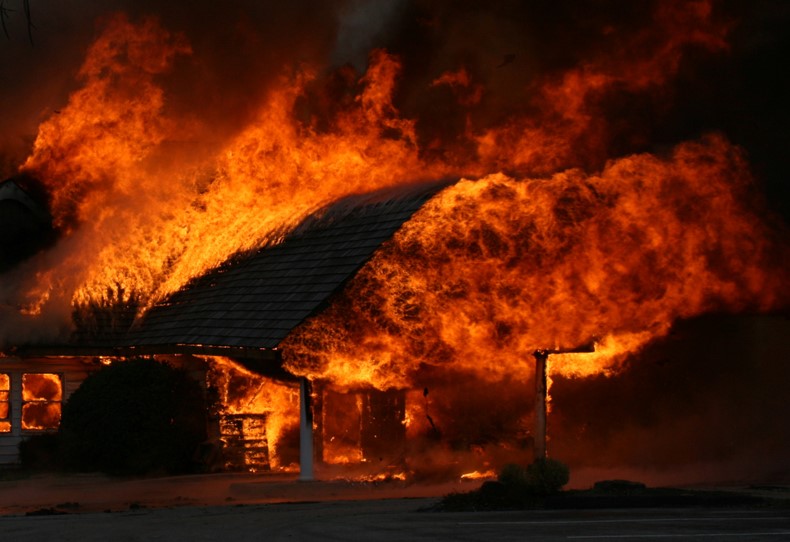
If you plan, renovate, or build with any exterior materials in a fire-prone region, you may have come across the term wildland-urban interface (WUI). The term is usually found in permits, planning applications, or material data sheets supplied by manufacturers. You can save time, money, and potential problems by understanding the definition of this zone, the building codes that apply to both local and state building rules, and the compliance regulations.
We have put together a helpful guide about what WUI means, the WUI Building Codes, and how dasso XTR's bamboo products are engineered to meet them.
What Is the WUI Code?
Defined by the Fire Administration as "the area where structures and other development come in contact with or intermingle with undeveloped wildland and wooded areas,” the Wildland Urban Interface (WUI) is a zone where buildings, homes, and other development extend toward forest margins and steep, vegetation-covered slopes.
This line is not a rigid, fixed line on a map, but rather a set of conditions, such as vegetation density, spatial arrangement, climate, and topography. When combined, they increase the likelihood of a wildfire reaching a building.
WUI increases by about 2 million acres annually, driven by the constant expansion of construction and communities across the country. This makes the WUI code a regulatory measure in response to this building growth and the accompanying fire risk. Accordingly, it requires that the interface between buildings and nature be specifically designed to resist fires.
The most frequently cited model WUI code is the International Wildland-Urban Interface Code (IWUIC), which is an additional supplement to existing building and fire codes. It’s specifically aimed at wildland fire exposure and includes special fire safety measures such as ember-resistant vents, fire-resistant decking, and fire-resistant areas built around structures.
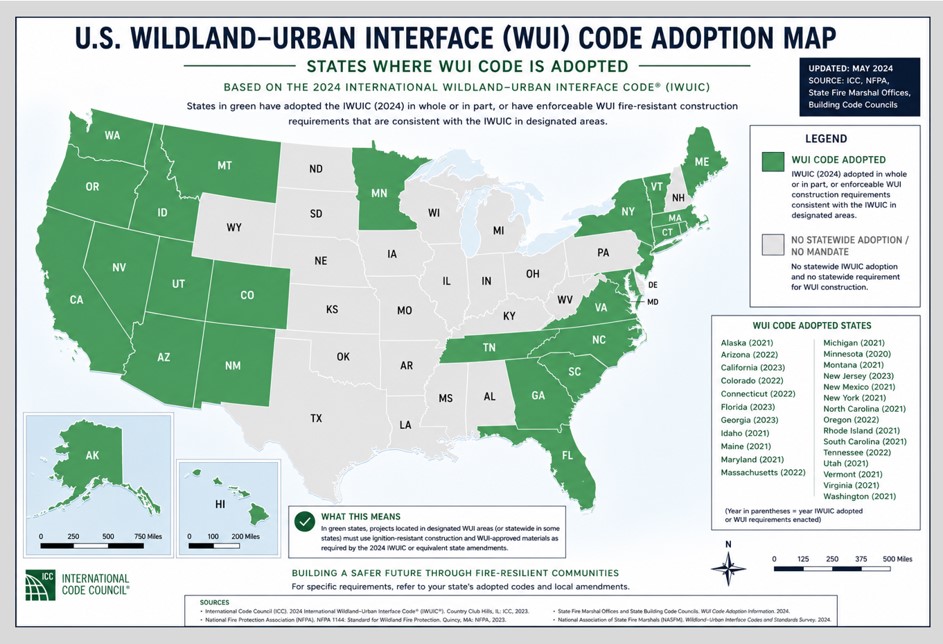
WUI Building Code
California is the national model for WUI building code
The first state in America to formalize these requirements was California, and its approach has since served as a model for the rest of the country.
California Building Code Chapter 7A requires that materials on the exterior surfaces of buildings in the WUI zone, including siding, decks, soffits, windows, and roof coverings, must pass state-mandated fire tests in order to be installed. The products must be listed and labeled with the state fire marshal’s Building Materials Listing program, or local building officials can just outright reject them.
Other States are following
Other states are now adopting the same principles and following suit. The IWUIC has been implemented or modified in nearly 200 jurisdictions across over 20 states, with some using it statewide.
All of this expansion is not just taking place in a vacuum; it is a direct result of how wildfire risk has evolved. Recent research by NASA and NOAA shows that climate change has resulted in at least a month longer fire season in certain parts of the western United States, and a doubled average peak of wildfire growth rate over the last two decades. Both the Department of the Interior and the U.S. Forest Service have noted that warmer, drier conditions, along with fuel buildup, are driving up the cost of fire suppression each year.
WUI requirements
If you are planning or engaging in design work in the WUI area, the code has strict requirements, including Class A fire-resistive roofing, ignition-resistant siding and WUI-approved decking, tempered glass, and screened vents that resist ember penetration. These requirements are in place because they control the two major mechanisms for igniting home fires: direct flame contact and wind-blown embers.
Within a designated zone, all of this is mandatory. Construction inspectors look for approved materials during the permit and inspection process. If your project doesn’t use listed materials, you could find yourself ripping out materials that you’ve already started using. This can be a huge cost in both time and money, which is why architects and contractors are requesting documented test results before installing products, rather than relying solely on a supplier's word about the materials' fire resistance.
WUI Compliance
As part of the broader Chapter 12-7A testing process, decking compliance is typically tested under California SFM Standard 12-7A-4A for decking material exposed to exterior wildfire conditions.
Siding and other cladding materials are assessed in a similar way using ASTM tests, particularly ASTM E84, for flame spread. The first step towards wildfire protection begins with the building's exterior. The right material can protect your project during a wildfire while also meeting WUI regulations.
dassoXTR Decking Materials and WUI Compliance
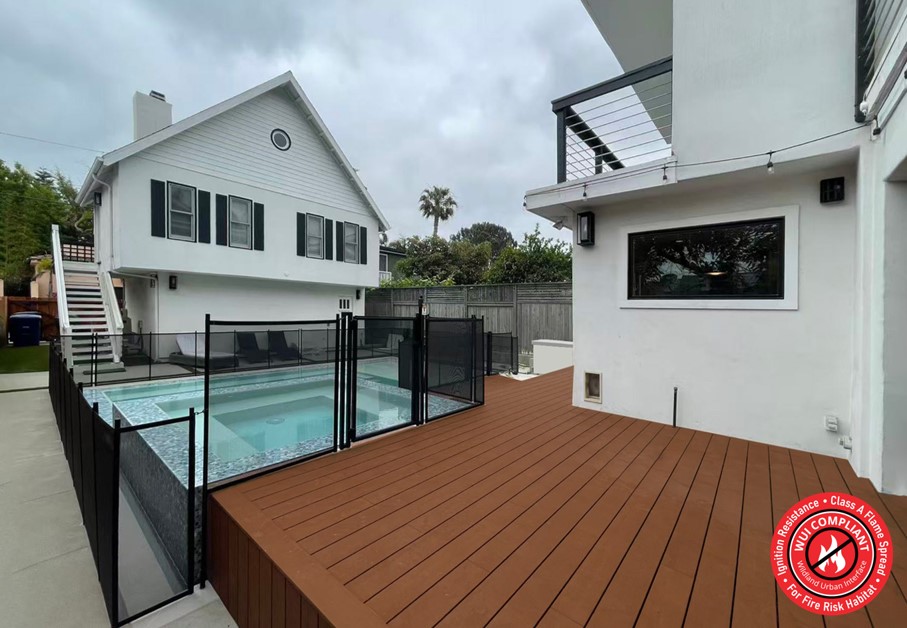
Our Fused Bamboo and decking materials are both designed specifically for such conditions. They are both fire-rated Class A and are also compatible with WUI as tested under California Chapter 7A regulations, specifically section 12-7A-4A for decking and equivalent for siding with ICC-ES approval.
If you use dassoXTR products in a designated wildfire urban fire zone, you can rest assured that they comply with the most stringent regulations in the country and meet building regulations.
For homeowners and contractors alike, this offers real protection for your building plans and peace of mind that your construction will meet all required safety standards. Engineered for performance and designed for beauty, our Fused Bamboo delivers durable, sustainable exterior solutions that rival the natural beauty of exotic hardwoods. Contact us today to find out more!
Frequently Asked Questions?
Is dassoXTR bamboo decking WUI-approved?
Yes, it is, dassoXTR’s range of bamboo decking is fully compliant with the SFM Standard 12-7A-4A of California and is fire-rated Class A under Chapter 7A for construction zones prone to wildfires. Our materials are fully compliant and suitable for WUI zone construction.
Do I need WUI-compliant materials outside California?
Many states west of the Mississippi River, as well as several areas in the Mountain West and Pacific Northwest, have adopted IWUIC guidelines. More join them as wildfires across the country increase. Check with your local building department to find out exactly what is required.
What's the difference between "Class A fire-rated" and "WUI compliant"?
A material that is Class A fire-rated has undergone standard testing for its ability to resist the spread of flames. WUI compliance is an overall designation indicating that a product is compliant with the WUI building code of the jurisdiction in question, such as California Chapter 7A.
Can I use dassoXTR siding and decking together on a WUI project?
Yes, you can use both of these materials as dassoXTR’s siding and decking have been tested for WUI areas and can be used together in a single WUI project. Both of these products have passed the stringent testing requirements.
How do I know if my property is in a designated WUI zone?
To find out if your property is situated in a designated WUI zone, check with your local building/planning authority. Also, many states' fire marshals/states' forestry departments publish online WUI zone maps. If your property is in a high-risk zone, choose the appropriate materials for your project.
Avery Chua
Avery Chua has over 30 years of manufacturing and product development in the wood and bamboo-based industry. He has worked across industry mostly in the pioneering stage of production involving MDF, plywood, adhesives and modern coatings. He wears many hats throughout his journey ranging from technologist, quality control, production, R&D, product development and market expansion. His knowledge comes handy in integrating usage of wood, bamboo, adhesives and coatings.