Ipe vs Composite Decking
By
Avery Chua
Posted on
Tuesday, September 29, 2026 4:19 AM
Which Is Right for Your Project? (And Why Bamboo Might Be the Better Choice)
What You’ll Learn in This Post
- The key differences between Ipe and composite decking and their respective advantages and disadvantages.
- A side-by-side comparison so you can quickly weigh priorities for your next project.
- Why bamboo decking is emerging as a third option and how it stacks up on sustainability.
- The lifetime value of each decking material and how to match decking choice to design goals.
If you're specting decks this season, you may have already had this conversation with clients: Ipe or composite? Premium hardwood decking or engineered composite decking?
Both have earned their place on the job site, but neither is the clear winner your clients probably think it is. In fact, both decking materials come with trade-offs that show up long after the project has been delivered. Ipe's weight, cost, and sourcing issues can be a problem during both procurement and installation. And composite's heat retention, fade patterns, and limited refinishing options can make it feel less… premium.
A third option gives contractors a smarter answer to hand clients: fused bamboo, a decking material that matches both hardwood's performance and composite’s easy maintenance.
Learning about the Contenders
So, what is Ipe and what is composite decking?
Ipe (pronounced "ee-pay") is a dense tropical hardwood harvested primarily from South American rainforests. Known for its exceptional durability, rich chocolate-brown color, and near-legendary lifespan, ipe has been the gold standard for premium wood decks for decades.
Composite decking is an engineered product made from a blend of wood fibers and recycled plastics. It was developed as a lower-maintenance alternative to natural wood, promising the look of timber without the upkeep.
Both materials have their place but come with trade-offs that eventually show up with time.
Ipe Decking: The Traditional Premium Choice
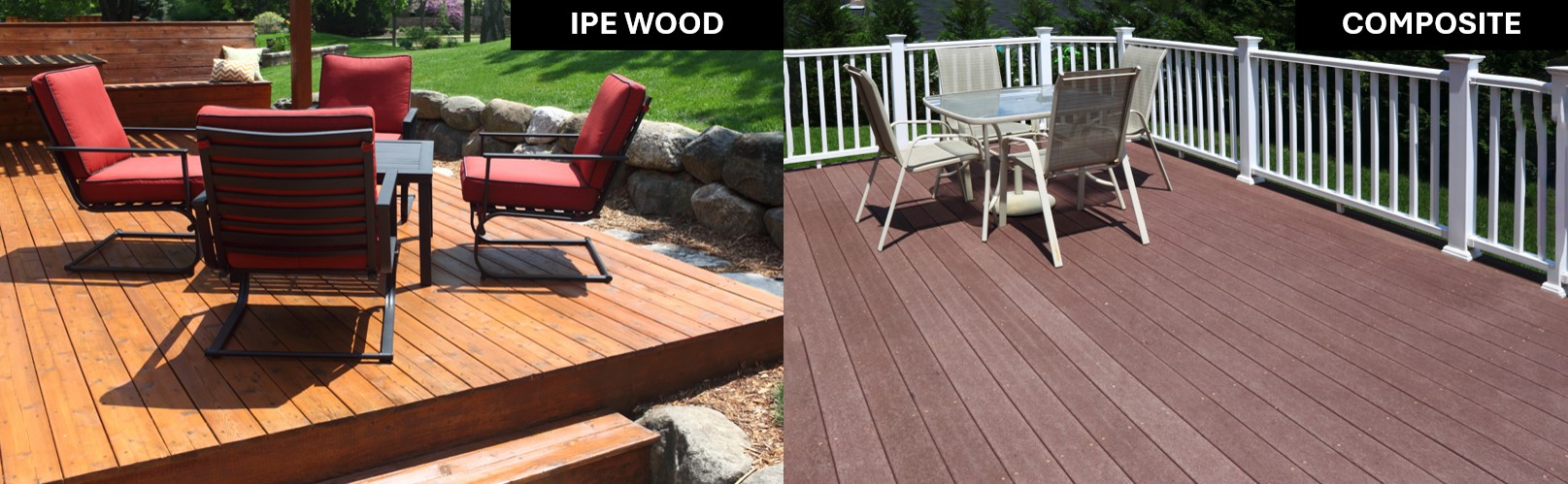
Ipe decking has earned its reputation for good reason. Made of Ipe wood, it is incredibly dense; so much so that it doesn't even float in water, and its hardness rating rivals steel in resistance to denting and scratching.
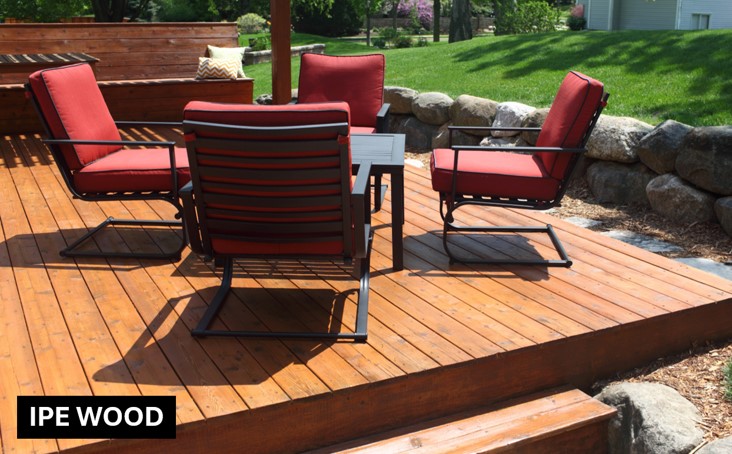
Advantages of Ipe:
- Class A fire rating (the same as concrete and steel).
- Natural resistance to rot, insects, and mold.
- Lifespan of 40–75 years when properly maintained.
- Beautiful, rich grain patterns and warm color tones.
- A premium look that matches any design.
Drawbacks of Ipe:
- Environmental concerns due to rainforest sourcing.
- Very heavy and difficult to work with.
- Requires pre-drilling and specialized fasteners.
- High cost. It’s among the most expensive decking options available.
- Requires regular oiling to maintain color (otherwise weathers to silver-gray).
Composite Decking: The Low-Maintenance Alternative
Composite decking has become popular because it’s practical and easy to maintain. Contractors favor it for projects where homeowners want a "set it and forget it" deck.
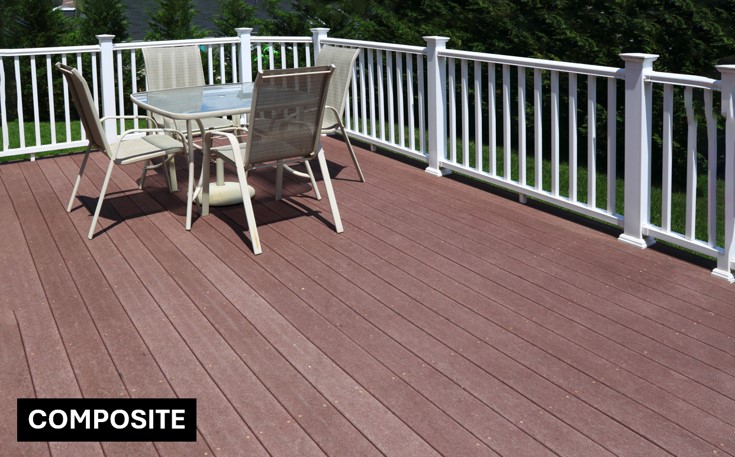
Advantages of Composite:
- Minimal maintenance, with no staining or sealing required.
- Consistent color and appearance across boards.
- Resistant to splintering and warping.
- Often made from recycled materials.
Drawbacks of Composite:
- Appearance can look artificial, particularly up close.
- Surface temperatures can become uncomfortably hot in direct sun.
- Susceptible to mold and mildew in shaded areas.
- Shorter lifespan than premium hardwoods (usually 25–30 years).
- Cannot be refinished if damaged or faded.
- Environmental impact of plastic components.
Ipe Decking vs Composite: A Direct Comparison
Let’s compare these two decking material options side by side, because the choice for your next construction project comes down to priorities.
|
Factor
|
Ipe
|
Composite
|
|
Lifespan
|
40–75 years
|
25–30 years
|
|
Maintenance
|
Moderate
|
Low
|
|
Appearance
|
Natural, premium
|
Uniform, synthetic
|
|
Cost (installed)
|
$$$$
|
$$$
|
|
Sustainability
|
Concerning
|
Mixed
|
|
Heat retention
|
Low
|
High
|
The answer to the whole ipe decking vs composite deck debate depends on whether your construction project needs the authenticity and longevity of real wood or the convenience of a manufactured product.
And, of course, there is a third option that outperforms both.
The Case for Bamboo Decking as an Excellent Alternative
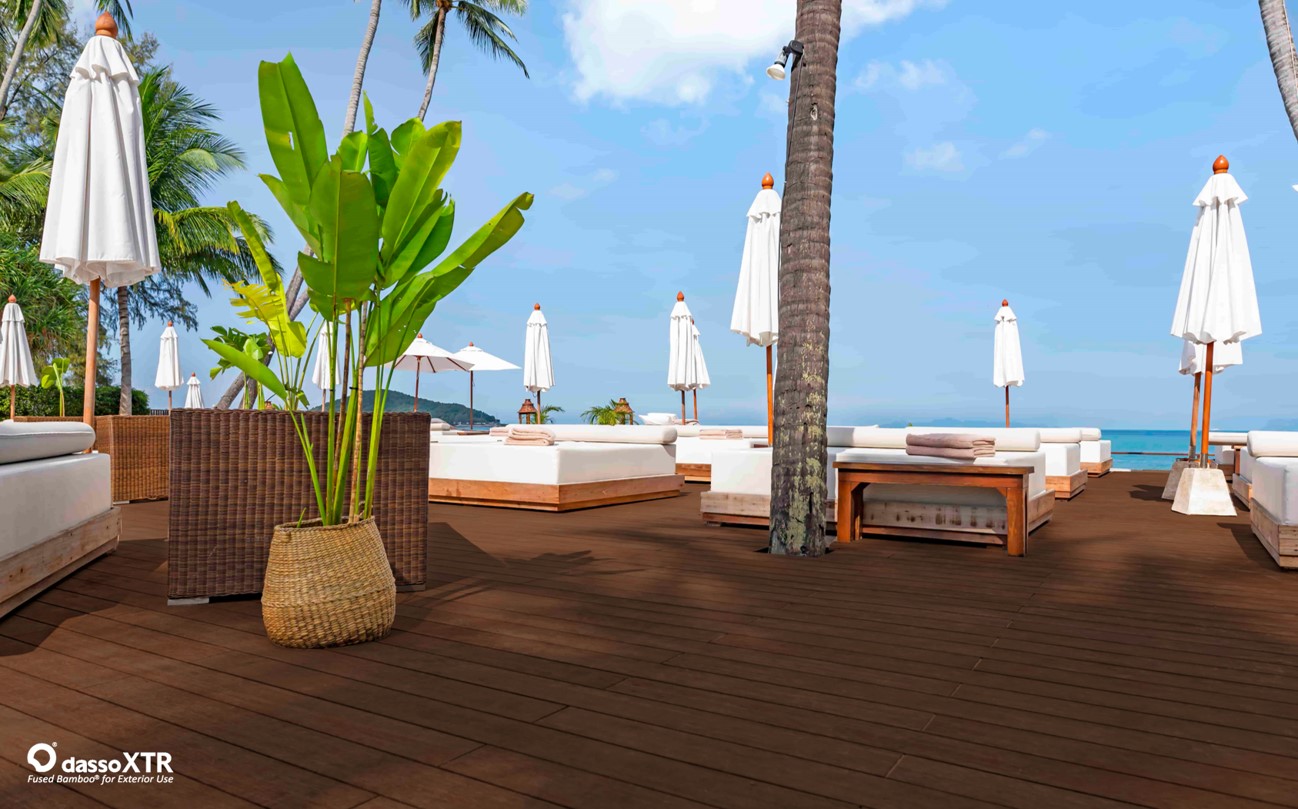
Here's where dassoXTR changes the conversation. Fused bamboo decking combines the best qualities of both ipe hardwood and composite, without any of their weaknesses.
Unlike traditional bamboo products, dassoXTR uses a proprietary thermal treatment process that transforms bamboo fibers into an incredibly dense, stable, and durable material. The result is a deck board that outperforms other options for most construction projects.
 Bamboo rivals Ipe in hardness and durability
With a Janka rating comparable to premium tropical hardwoods, bamboo decking is extremely hard and durable.
A sustainable choice
Does your project require a sustainable choice? Bamboo regenerates in 5–7 years, compared to the 60+ years tropical hardwoods need to mature, meaning it’s one of the most sustainable decking materials available.
Maintains dimensional stability
Unlike natural wood, which expands and contracts with humidity changes, bamboo decking stays stable in any weather.
Requires low maintenance
As a material, bamboo is like composite but without an artificial appearance. It looks natural but doesn’t need restraining, maintenance, or much care.
Achieves a Class A fire rating
Bamboo decking carries a Class A fire rating, making it perfect for projects in areas that require fire-resistant materials. In that regard, it matches Ipe's performance.
Looks authentic
Bamboo looks authentic and natural, something that composite cannot replicate. Even if your projects specify Brazilian hardwood like Ipe or Cumaru decking, dassoXTR bamboo offers comparable performance, natural looks, and a significantly smaller environmental footprint.
Cost Comparison: Value Over Time
An accurate cost comparison should account for more than upfront pricing. Ipe carries the highest initial cost, while composite is the lowest. dassoXTR’s fused bamboo sits between the two but delivers a lifespan closer to Ipe than composite.
Next, factor in:
- Longevity (25+ years for bamboo vs 25–30 for composite).
- Refinishing potential (bamboo can be sanded and refinished; composite cannot).
- Environmental cost (bamboo is rapidly renewable).
- Aesthetic longevity (bamboo maintains its natural beauty).
When you do, the lifetime value of Ipe hardwood decking alternatives like fused bamboo often surpasses both traditional options.
Design Flexibility and Aesthetics
Browsing an Ipe decking gallery or Cumaru decking gallery displays the timeless appeal of tropical hardwoods, with their rich tones, tight grain, and sleek finishes. Bamboo decking delivers a similar look, with the added benefit of consistent grain patterns and color uniformity that simplify installation planning, especially for larger construction projects.
While Ipe wood decking aesthetics match a modern minimalist rooftop terrace as well as a classic residential backyard, it’s easy to achieve this look, and arguably improve upon it, with high-performance bamboo.
Key Takeaways
- Ipe decking offers outstanding longevity and beauty but comes with high costs and serious environmental concerns tied to rainforest sourcing.
- Composite decking offers low-maintenance convenience but sacrifices authenticity and usually lasts only 25–30 years, with no option to refinish.
- Bamboo decking from dassoXTR combines the durability of tropical hardwoods with the sustainability of a rapidly renewable resource.
- If you are comparing decking materials, look beyond upfront cost and consider lifespan, maintenance, aesthetics, and environmental impact.
- For projects that require the premium look of ipe without its ecological cost, dasso XTR bamboo is an excellent alternative on the market today.
_______________________________________________________________________________________________________________________________________________________________________________________________________________________
FAQs
Is bamboo decking as durable as Ipe?
Properly designed fused bamboo has density and hardness similar to Ipe and other Brazilian hardwoods, with comparable resistance to wear, insects, and rot.
How does bamboo decking compare to composite in appearance?
Bamboo decking offers the authentic look and feels of natural wood, which composite products struggle to replicate. It ages gracefully and can be refinished, unlike composite boards.
Does bamboo decking expand and contract like natural wood?
All natural materials experience some movement, but dassoXTR's proprietary treatment process reduces expansion and contraction compared to untreated wood or traditional hardwood decking.
Is bamboo decking environmentally friendly?
Absolutely. Bamboo is one of the fastest-growing plants on earth, regenerating fully in 5–7 years compared to 60+ years for tropical hardwoods. It’s a genuinely sustainable choice.
What maintenance does bamboo decking require?
Bamboo decking requires minimal maintenance. All that you need is occasional cleaning and periodic oiling to preserve its original color. Left untreated, it weathers to an attractive silver-gray patina like Ipe.
Can bamboo decking handle extreme weather?
Yes. High-performance fused bamboo decking is designed to withstand freeze-thaw cycles, intense UV exposure, and heavy moisture. This makes it a good decking material for almost any climate, with a Class A fire rating as a bonus.
Is bamboo decking more expensive than composite?
Pricewise, fused bamboo decking sits between composite and Ipe, but its longer lifespan and refinishing potential often make it more cost-effective over time.
Avery Chua
Avery Chua has over 30 years of manufacturing and product development in the wood and bamboo-based industry. He has worked across industry mostly in the pioneering stage of production involving MDF, plywood, adhesives and modern coatings. He wears many hats throughout his journey ranging from technologist, quality control, production, R&D, product development and market expansion. His knowledge comes handy in integrating usage of wood, bamboo, adhesives and coatings.